We Are Building a Home in Ayodhya.
Not a hotel. Not an ashram. A home that takes guests.
Not a hotel. Not an ashram. A home that takes guests.
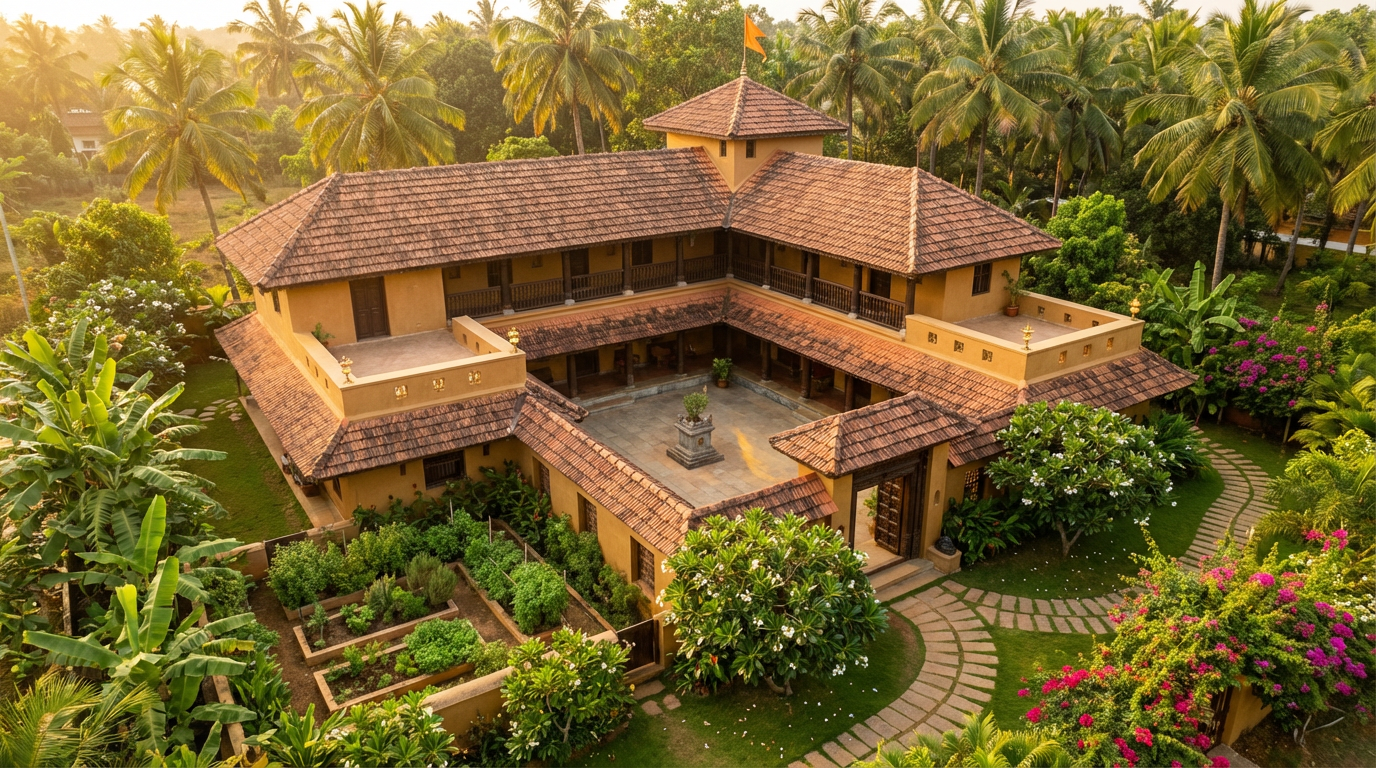
I have been looking for this plot for three years. East-facing. Vastu-compliant. Walking distance from the Saryu. Close enough to Ram Mandir that you can hear the bells, far enough that you sleep in silence.
Forty-five feet by one hundred feet. Ground plus two floors. Twelve rooms arranged around a central courtyard. At the Brahmasthan stands Tulsi ji. Every morning, we water the Tulsi. Every evening, we light the diya. This is the heartbeat of the house.
Each room carries an auspicious name from the Ramayana. Janmotsav. Swayamvar. Panchvati. Sundarkand. Sanjeevani. Not themes. Not decoration. The room named Vanvas has a garden visible from the window. The room named Bhakti is nearest the Kirtan Mandap. The story is in the architecture.
There is no alcohol here. There is silence after nine. The kitchen serves sattvic food. No onion, no garlic, no meat. We eat on the floor, on pattal leaves or kansa thali. Everyone eats the same meal.
This is not a business plan dressed as spirituality. This is a home. I am building the house I want to live in. If others want to stay, the door is open.
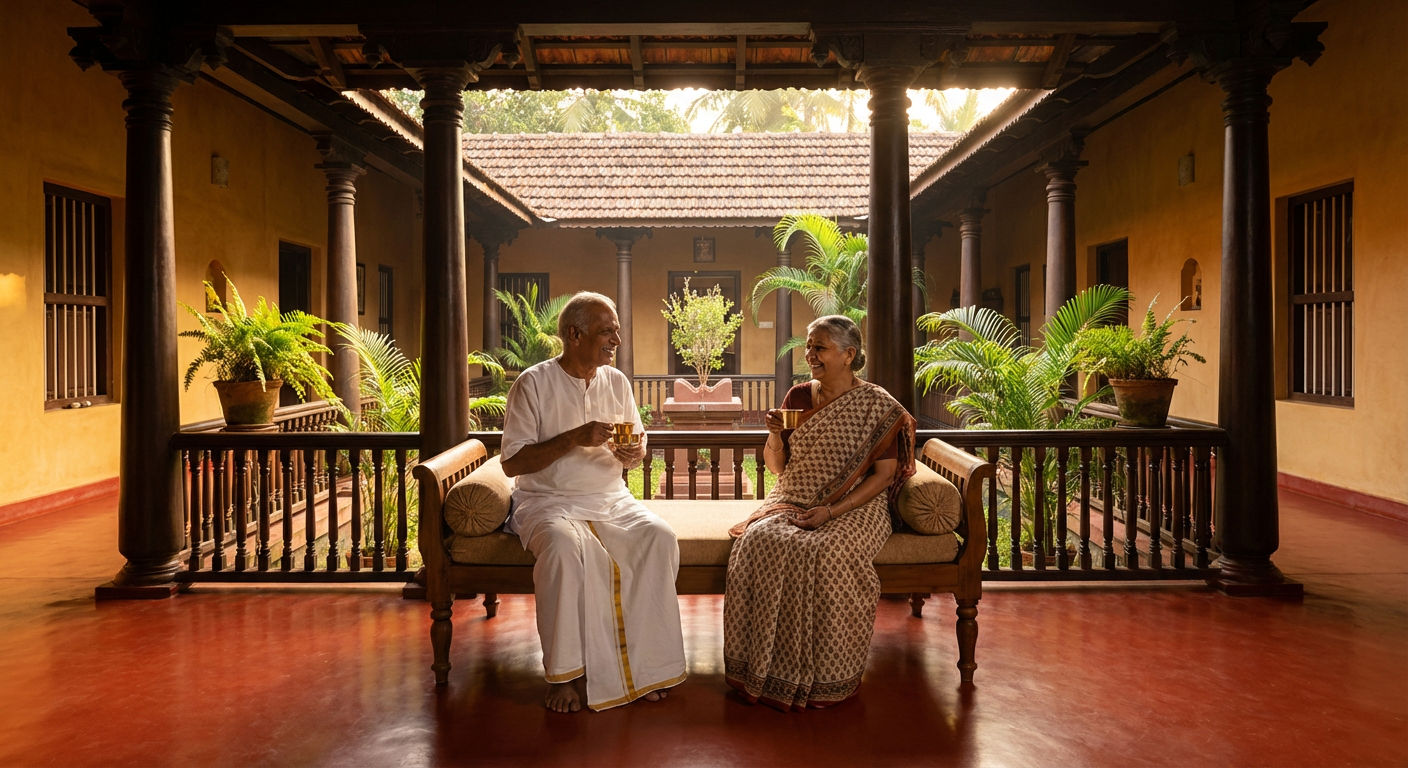
Because Shri Ram was born here. Because the Saryu still flows. Because after the Mandir, Ayodhya is waking up, and what it needs is not another hotel with a lobby and a checkout counter. It needs homes. Places where pilgrims can stay for a week, a month, a season. Places where the rhythm of the day is set by aarti, not by room service.
The city is changing. We want to be part of the change that is quiet, rooted, and permanent.
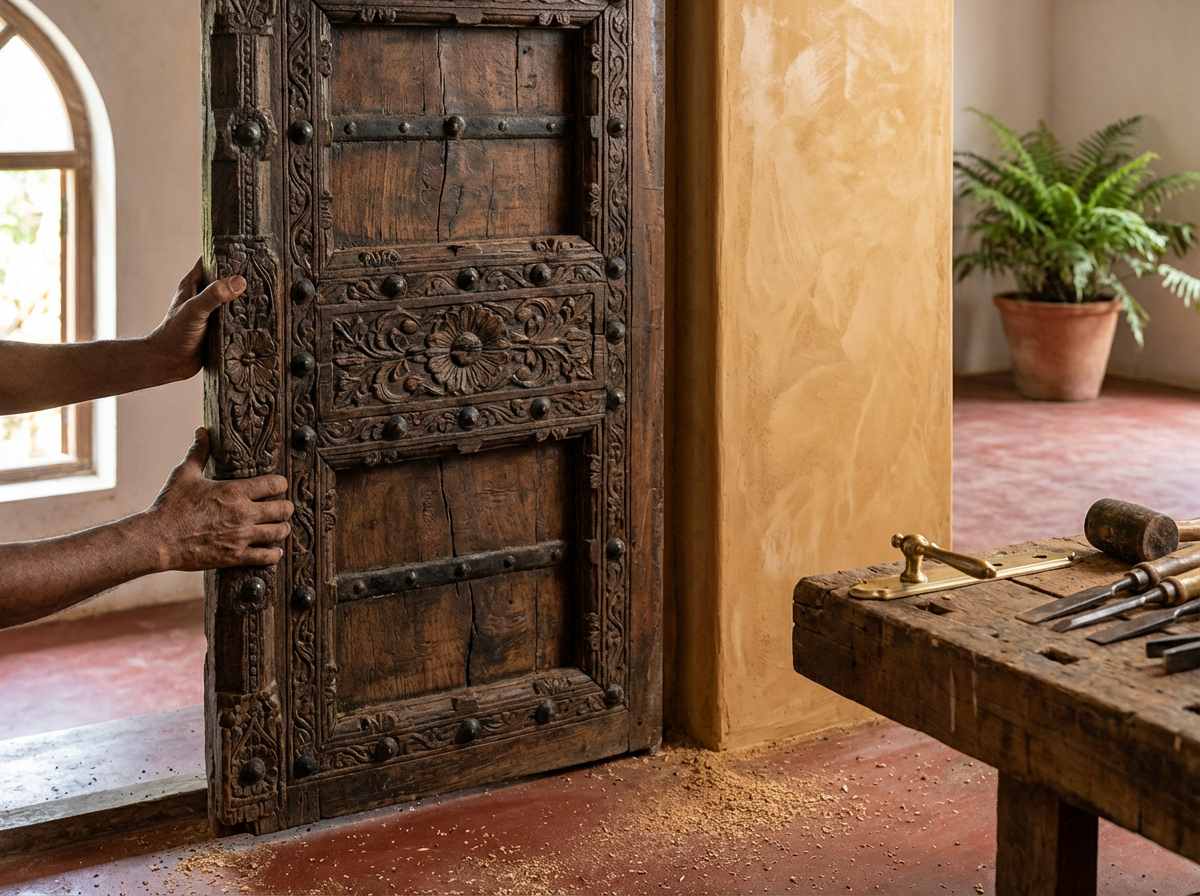
Reclaimed teak from Jodhpur. Lime plaster from Rajasthan. Athangudi tiles hand-poured in Chettinad. Brass fittings from Moradabad. Mangalore clay tiles on the roof.
Every material has a reason. Every joint is visible. Nothing is hidden behind plywood and paint. The walls breathe. The floors are cool in summer. The roof sheds monsoon rain the way it has for four hundred years.
We are not building a replica. We are building with the same intelligence that built the old houses. The knowledge is still alive. The craftsmen are still working. We just have to ask.
Six kinds of guests. All welcome. All fed the same thali.
Comes for Ram Mandir darshan, stays three to five days. Wants a clean room, morning aarti, and someone to tell them which temples to visit in what order. Does not want a hotel. Wants a home.
Researching the Ramayana, temple architecture, or Awadhi history. Needs a desk, good light, and a library. Stays for weeks. Talks to the kathavachak. Takes notes during Ram Katha.
Has finished raising children. Wants to spend a month near the Saryu. Wakes at four. Attends every aarti. Brings their own puja items. Needs a kitchenette and a lock on the door.
Comes for the terrace practice at five. Wants sattvic food, silence, and discipline. Not interested in luxury. Interested in routine.
Needs a room with a view of the courtyard. Writes in the morning, walks to the ghats in the evening. Stays a month. Leaves with a manuscript and a taste for khichdi.
Returns to India once a year. Wants the full experience: early morning aarti, ghat walk, Ram Katha, sattvic food. Wants their children to see what a traditional Hindu household feels like.
The difference is in the greeting. You arrive with tilak, aarti, and tulsi water. You leave with a garland. In between, you live here. Not visit. Live.
See the rooms