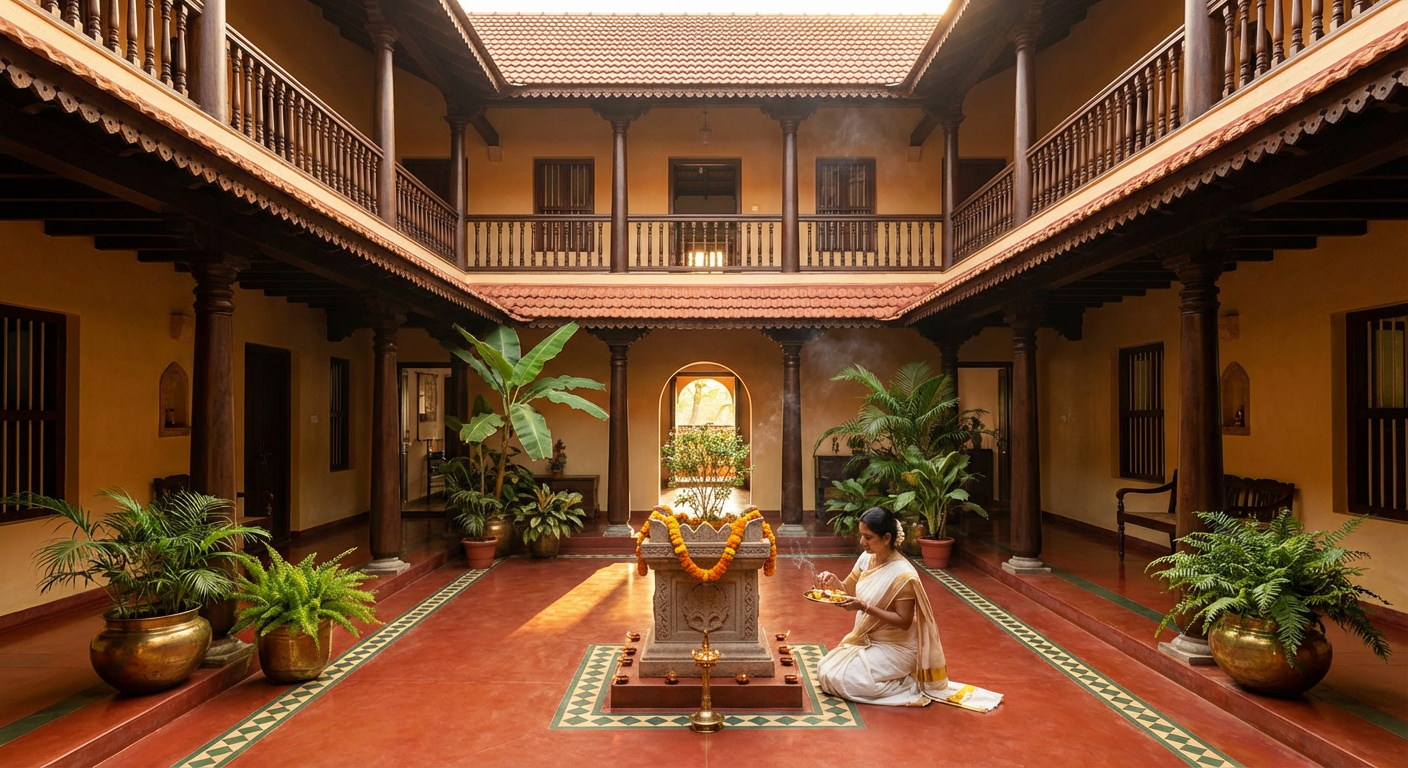
The Building Is the Teacher.
Every space has a purpose. Every wall faces the direction it was meant to.
Every space has a purpose. Every wall faces the direction it was meant to.
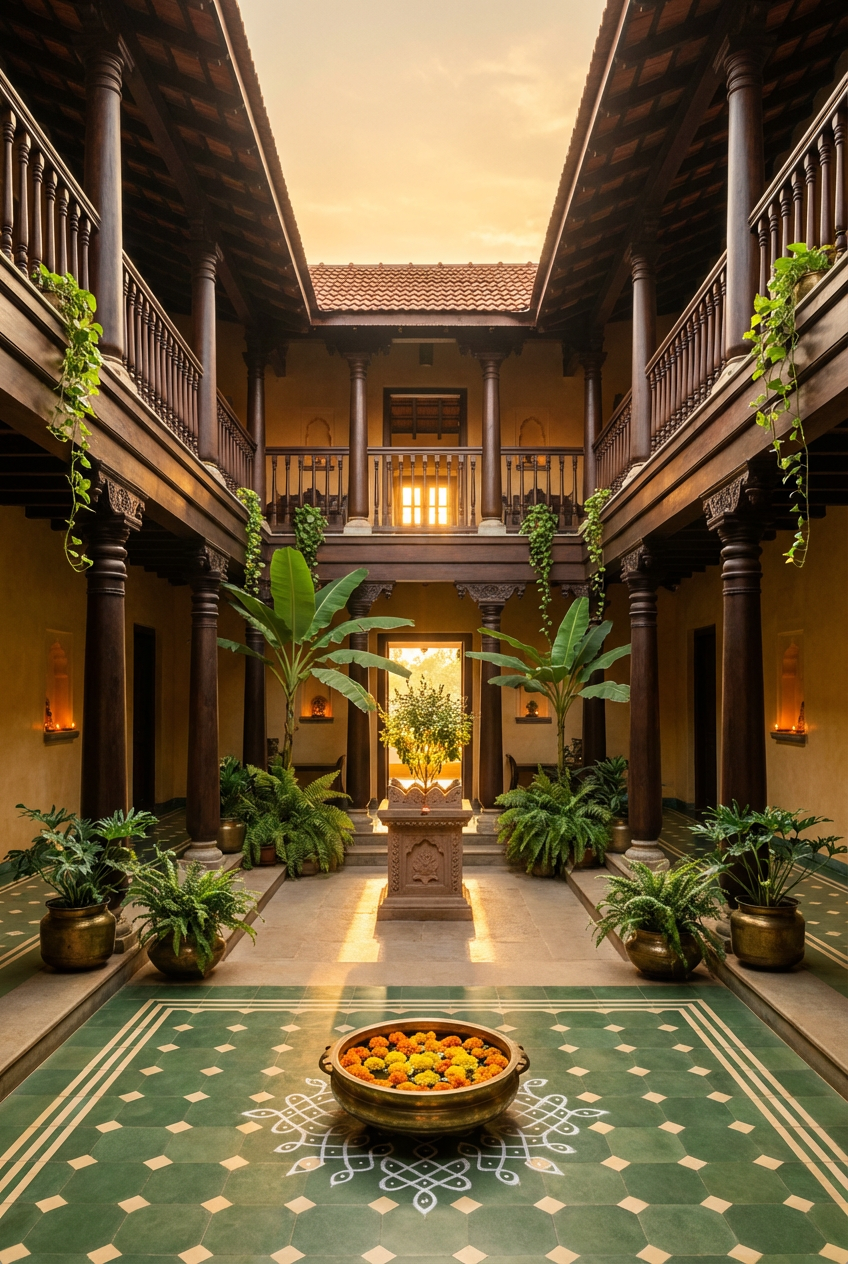
The courtyard is open to the sky. Tulsi ji grows at the centre. This is the Brahmasthan — the sacred void around which everything organises.
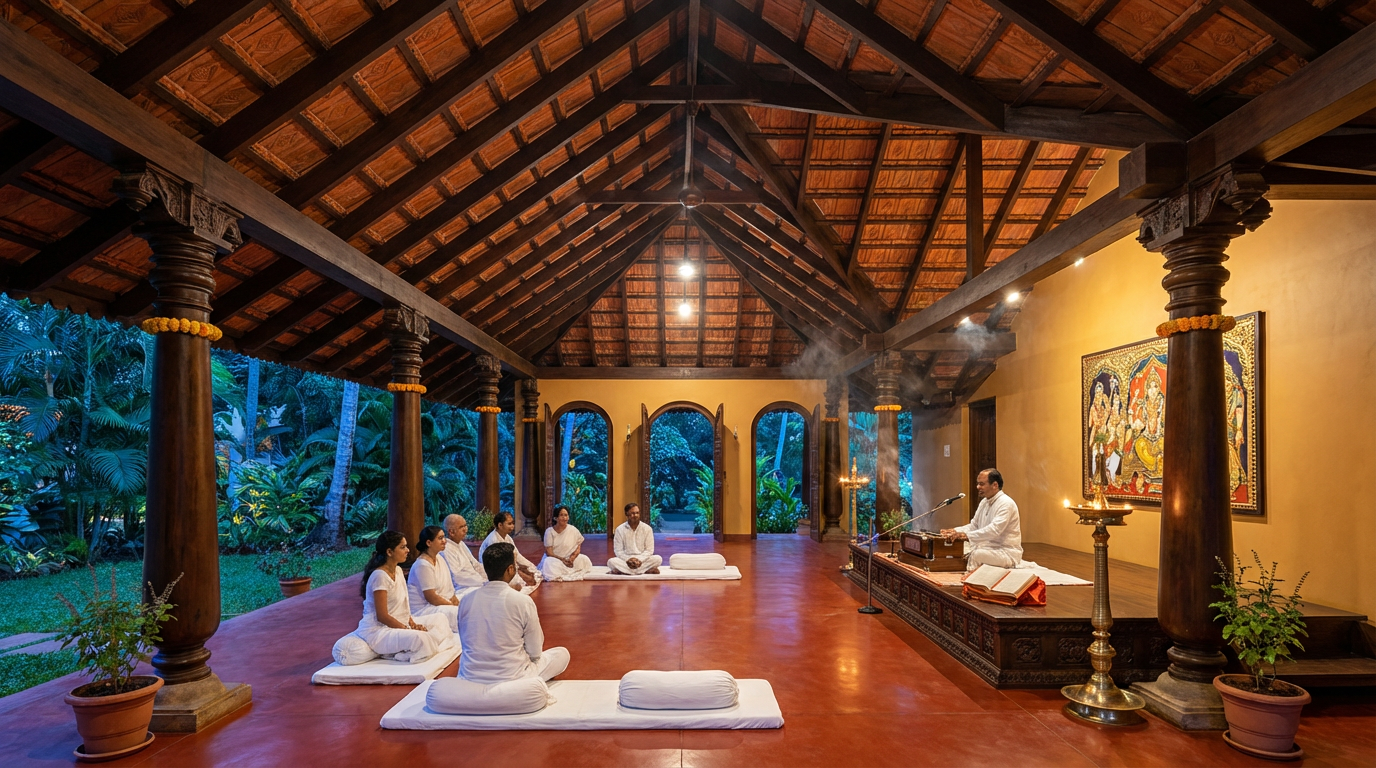
Four hundred square feet. Fourteen-foot wooden ceiling. Three open arches to the garden. The harmonium waits on the Vyasa Peeth.
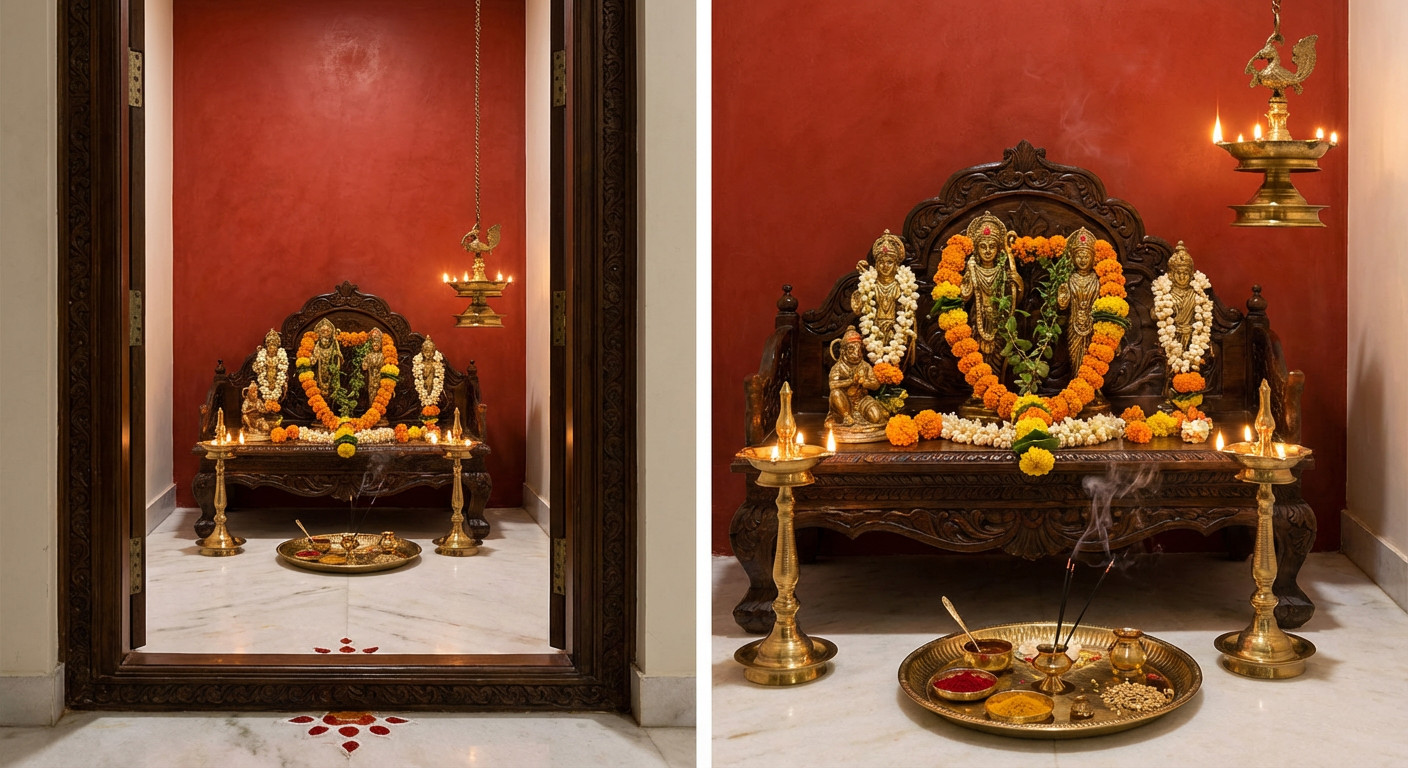
The door is five feet tall. You bow to enter. Oil lamps only. No electric light. Ram Parivar in brass on the singhasan.
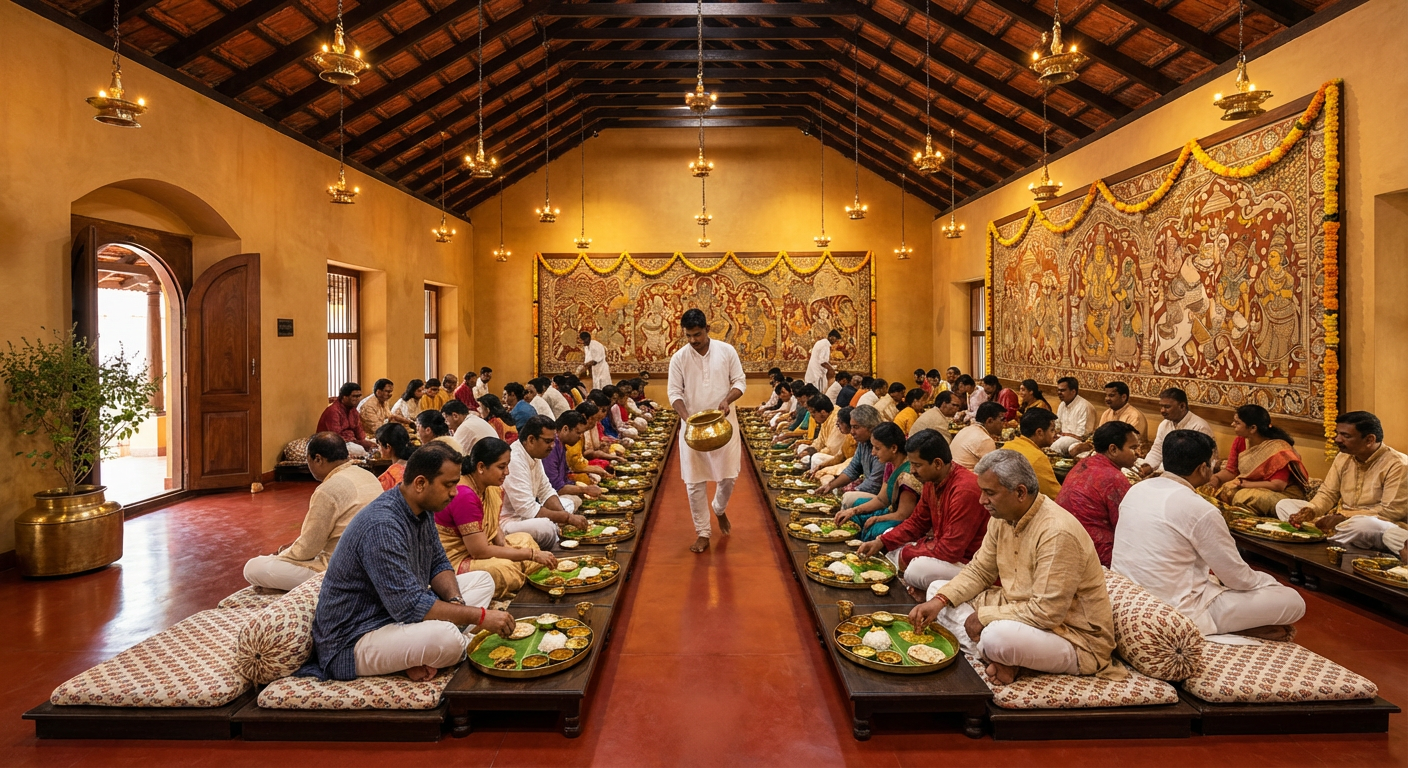
You eat on the floor. The food comes to you. Kansa thali. Banana leaf. Sadya-style service.
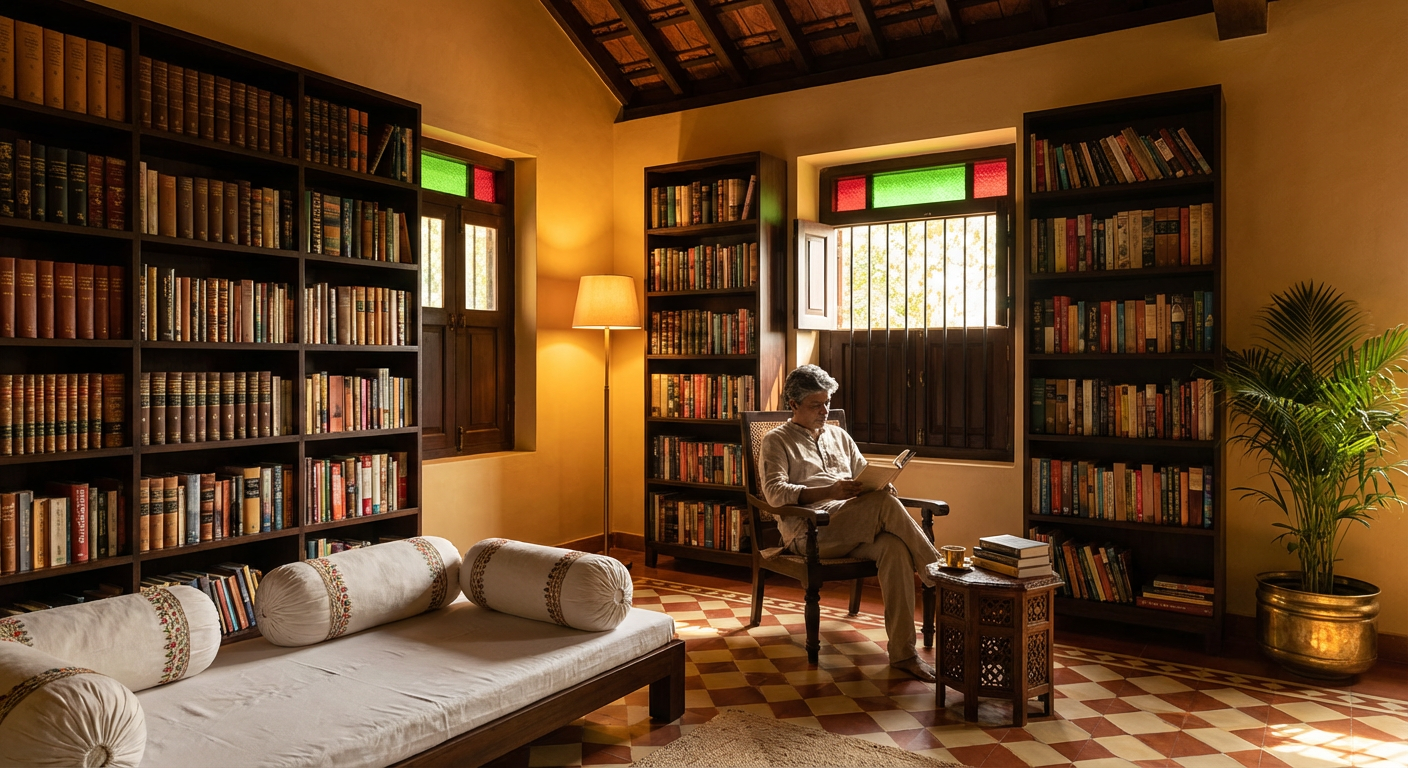
Ramcharitmanas. Valmiki. Kamban. The Gita. Hindi and English. A chai station in the corner.
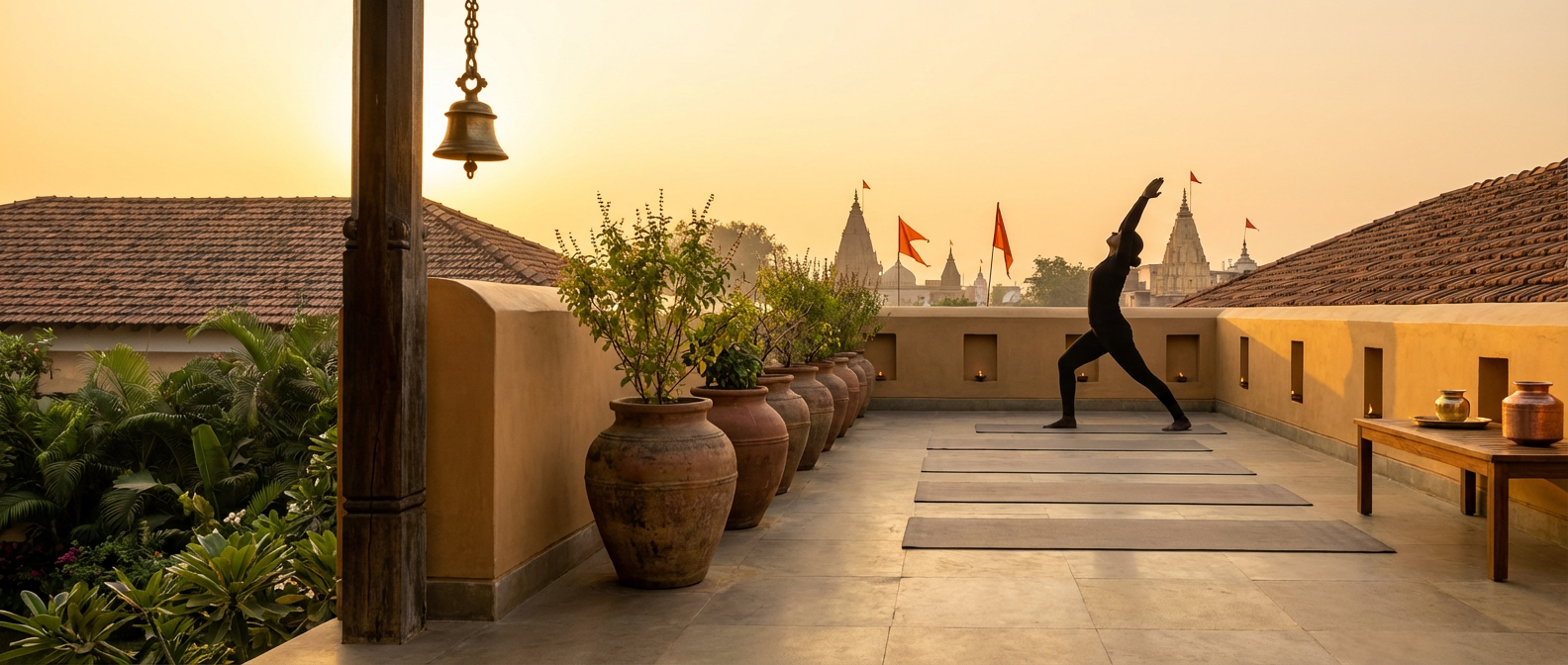
East-facing. Sunrise. Surya Namaskar. At dusk, a brass bell and the last light.
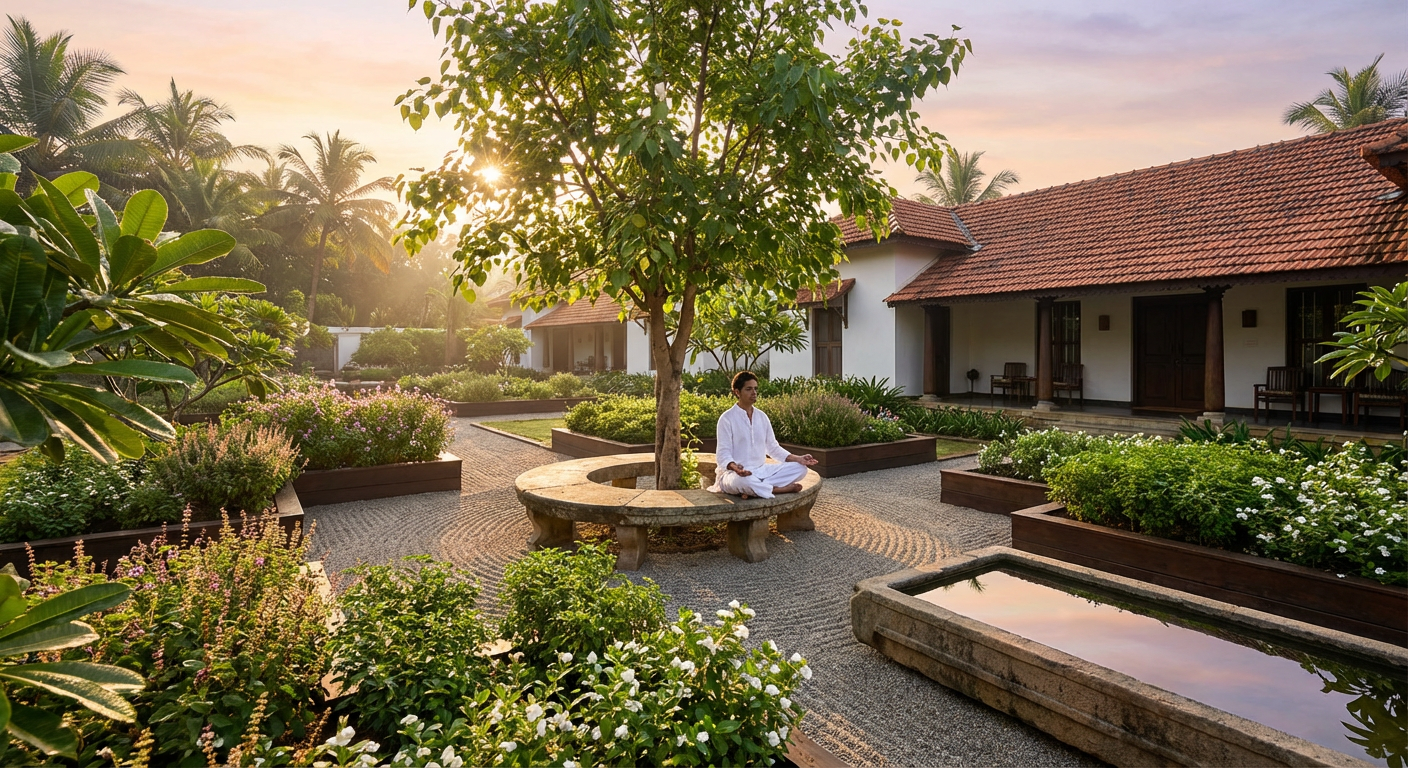
Tulsi, jasmine, parijat, peepal. A stone kund with still water. A bench under the tree.
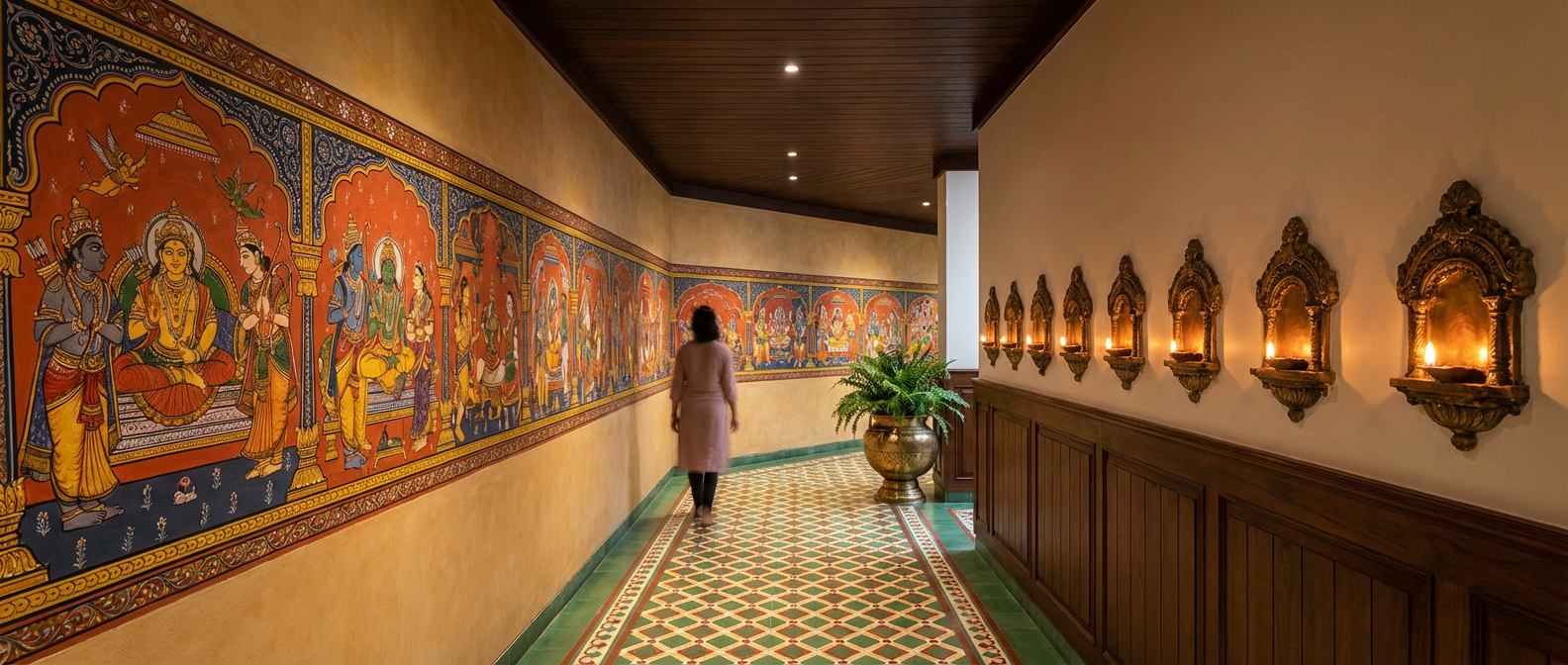
Walk clockwise. The Ramayana unfolds on the walls. Brass diyas light the way.