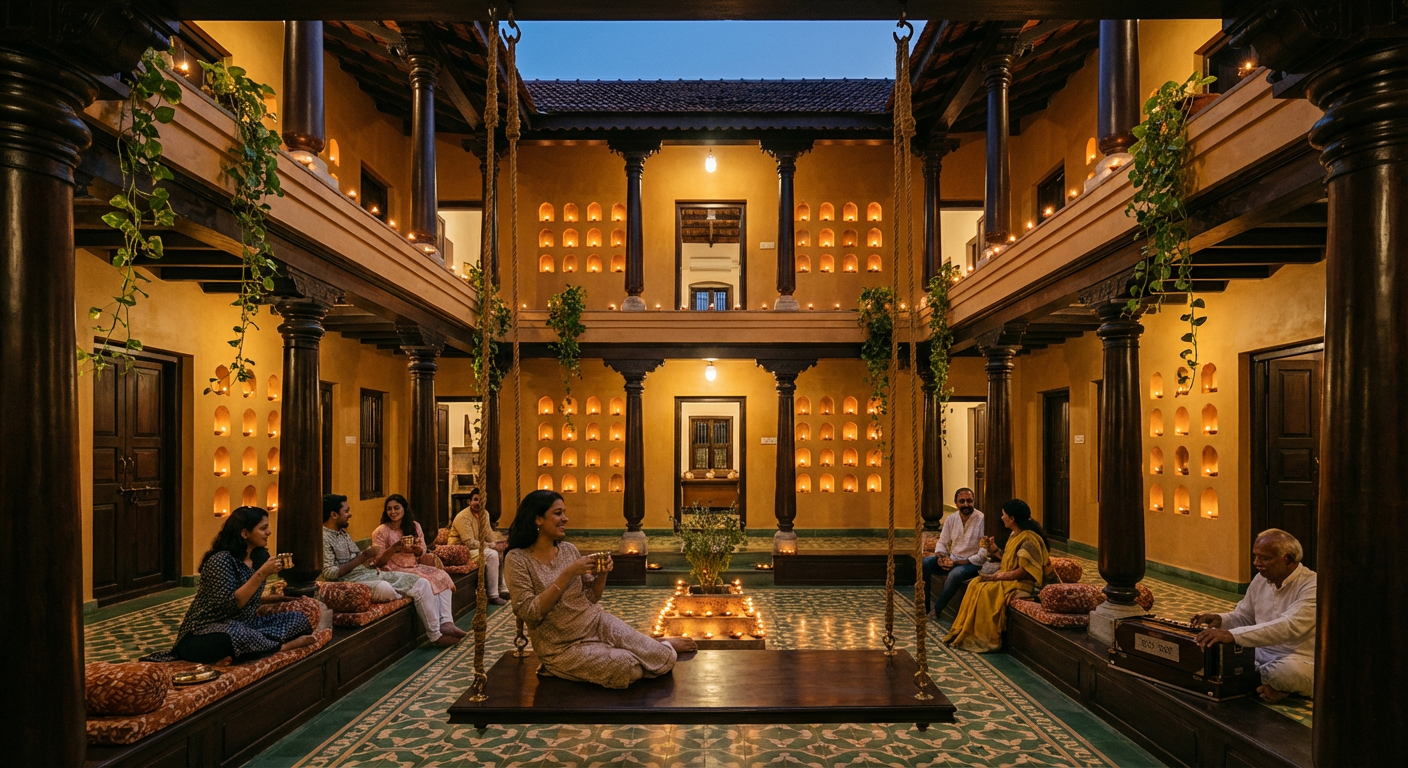
This Is Not a Visit. It Is a Life.
Stay for a week. A month. A season. The rhythm becomes your own.
Stay for a week. A month. A season. The rhythm becomes your own.
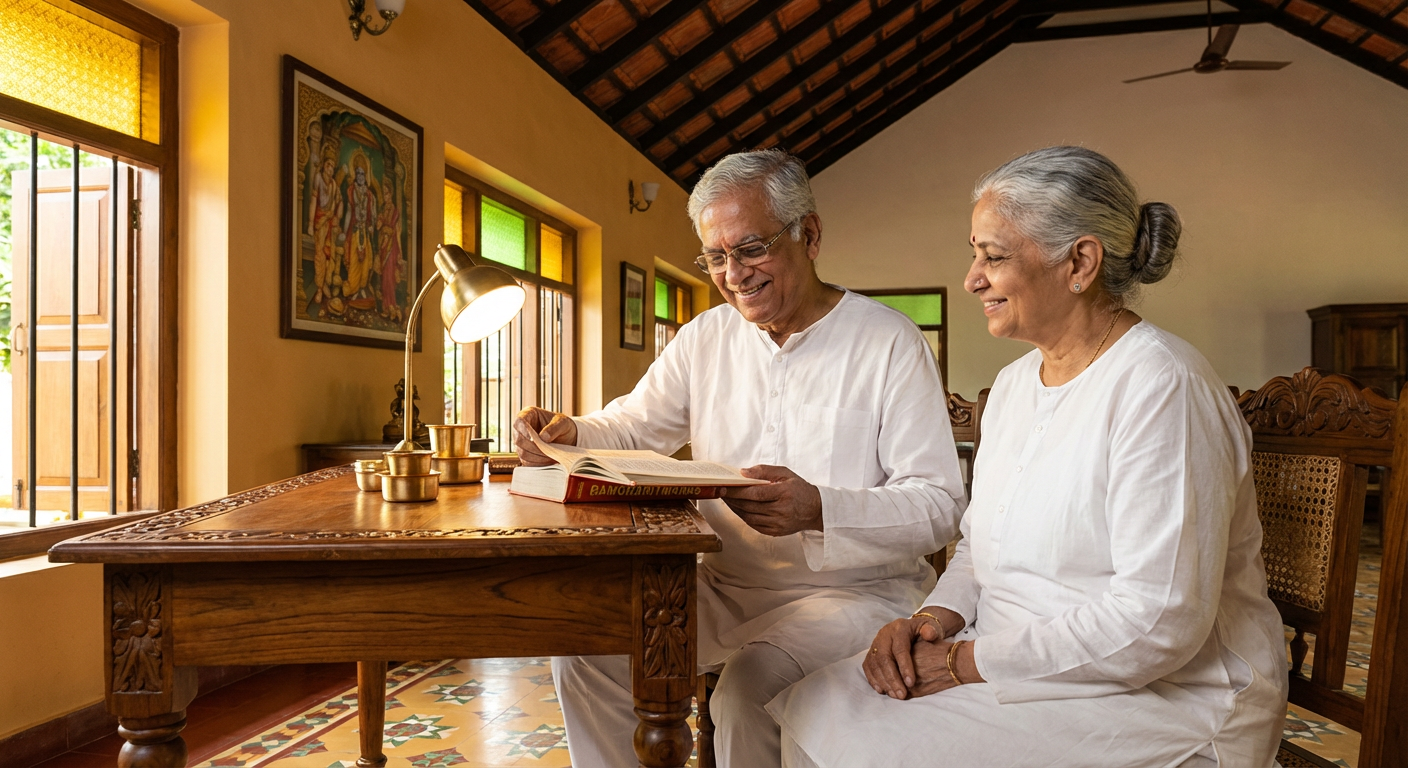
Some people come to Ayodhya for three days. Others come for three months. This house is built for both. But the long-stay rooms are different. They have a kitchenette. A writing desk. A lock on the door. A window that opens onto the courtyard or the street.
You are not a guest here. You are a resident. You have a key. You come and go. The house rhythm is there if you want it. If you do not, that is also fine.
Finished raising children. Want to spend a month or a season near the Saryu. Attend every aarti. Walk to the ghats at dawn. Need quiet, routine, and good food.
Researching the Ramayana, Awadhi history, temple architecture, or Tulsidas. Need a desk, a library, and access to the kathavachak. Stay for weeks.
Come for the terrace practice at five. Want sattvic food, silence, and discipline. Not interested in luxury. Interested in routine.
Need a room with a view of the courtyard. Write in the morning, walk to the ghats in the evening. Leave with a manuscript and a taste for khichdi.
Passing through Ayodhya. Need a simple room, a place to sit, sattvic food. No questions asked. Short or long stay. The door is open.
Return to India once a year. Want the full experience for their family. Want their children to see what a traditional Hindu household feels like. Stay for two weeks to a month.
8 rooms. Clean. Simple. Teak bed, writing desk, attached bathroom. Window to the courtyard.
4 rooms. Larger. Kitchenette with gas and utensils. Private balcony. Better light.
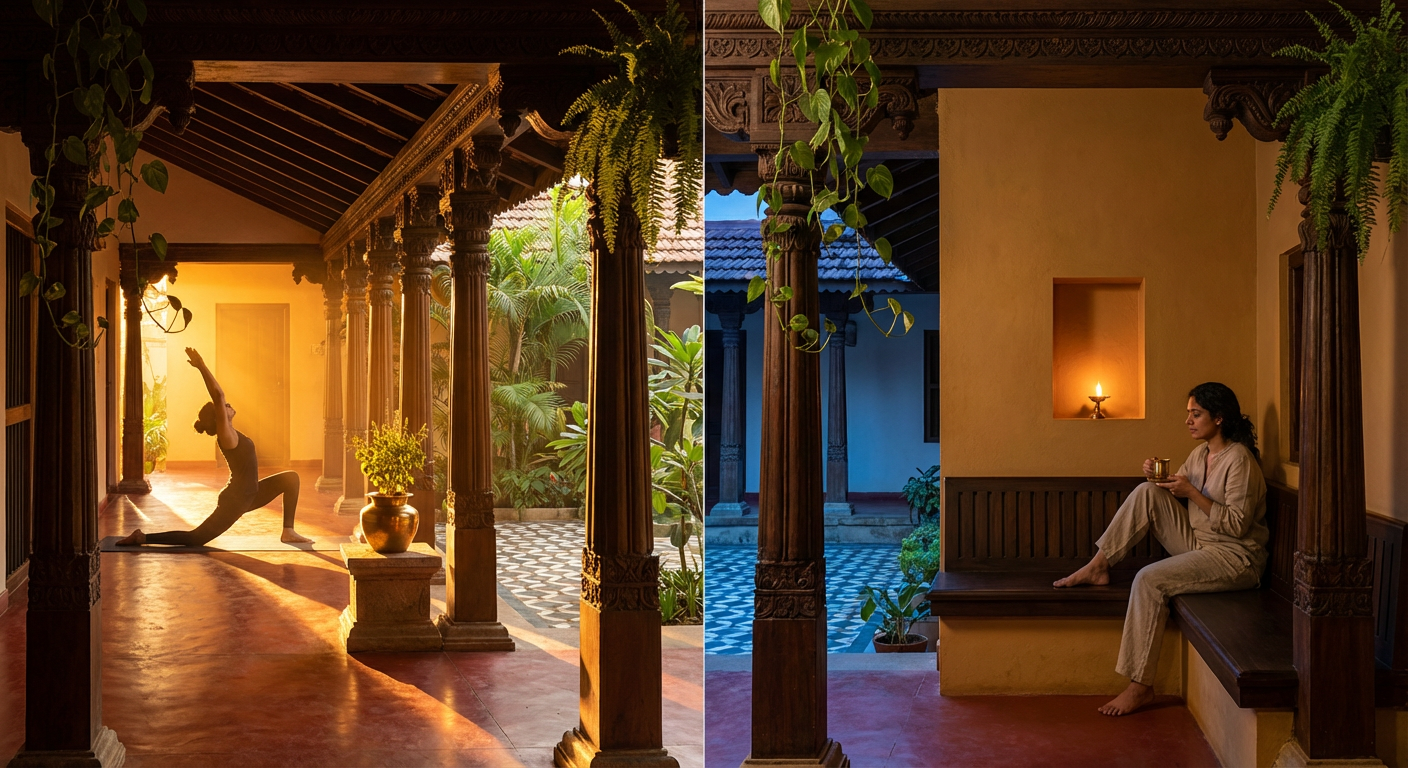
After two weeks, you stop counting days. The morning aarti is not an event. It is Tuesday. The thali is not a meal. It is lunch. The courtyard is not a space. It is where you sit after four o'clock with a book and a cup of chai.
That is what long-stay means. Not a longer booking. A different relationship with the place.
Write to us. Tell us when you want to come, how long you want to stay, and what you are looking for. We will write back.
Write to us