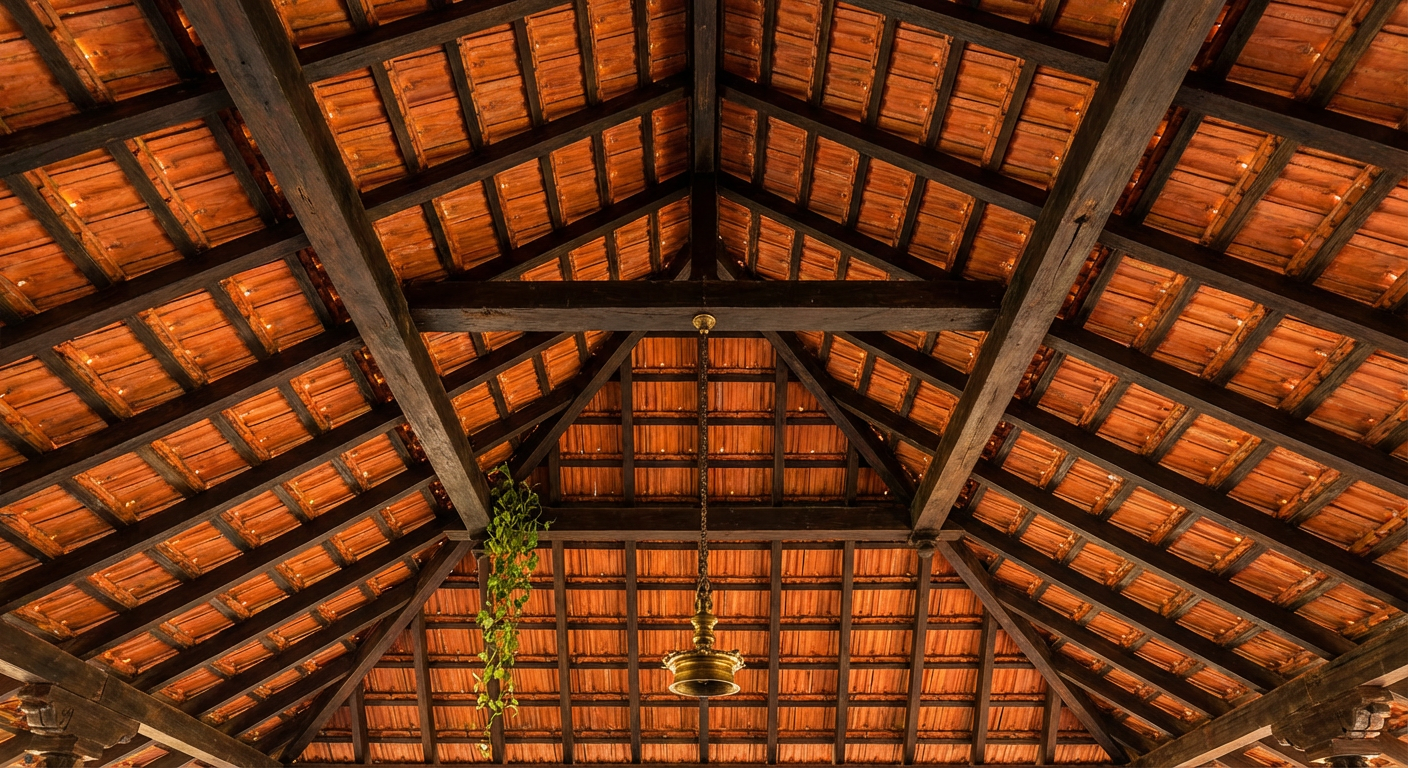
Every Material Has a Reason.
Nothing is decorative. Everything works.
Nothing is decorative. Everything works.
The entrance faces east. The puja room sits in the northeast. The kitchen is in the southeast, where the morning sun reaches first. The courtyard is open at the Brahmasthan. The toilets are in the northwest.
Vastu is not about rules. It is about orientation. Which direction gets light first. Where heat builds. Where wind enters. Where water drains. The ancients mapped this. We follow the map.
The Brahmasthan is empty. Open to the sky. Tulsi ji stands at the centre. No room occupies this space. No floor covers it. Rain falls here. Light falls here. The house breathes through this opening.
The house is built of five things. Each one is visible. Each one is working.
Athangudi tiles. Red oxide floors. Lime plaster walls. The ground you walk on is clay, fired or raw.
The courtyard collects rain. A stone channel carries it to the garden. The Saryu is fifteen minutes away on foot.
Diyas at every threshold. The kitchen hearth. Camphor at aarti. Fire is not hidden in wiring. It is visible and warm.
Jali screens in every corridor. Cross-ventilation through the courtyard. No air conditioning needed from October to March.
The open courtyard. The terrace. The sky above the Brahmasthan. Space is not wasted. It is the fifth material.
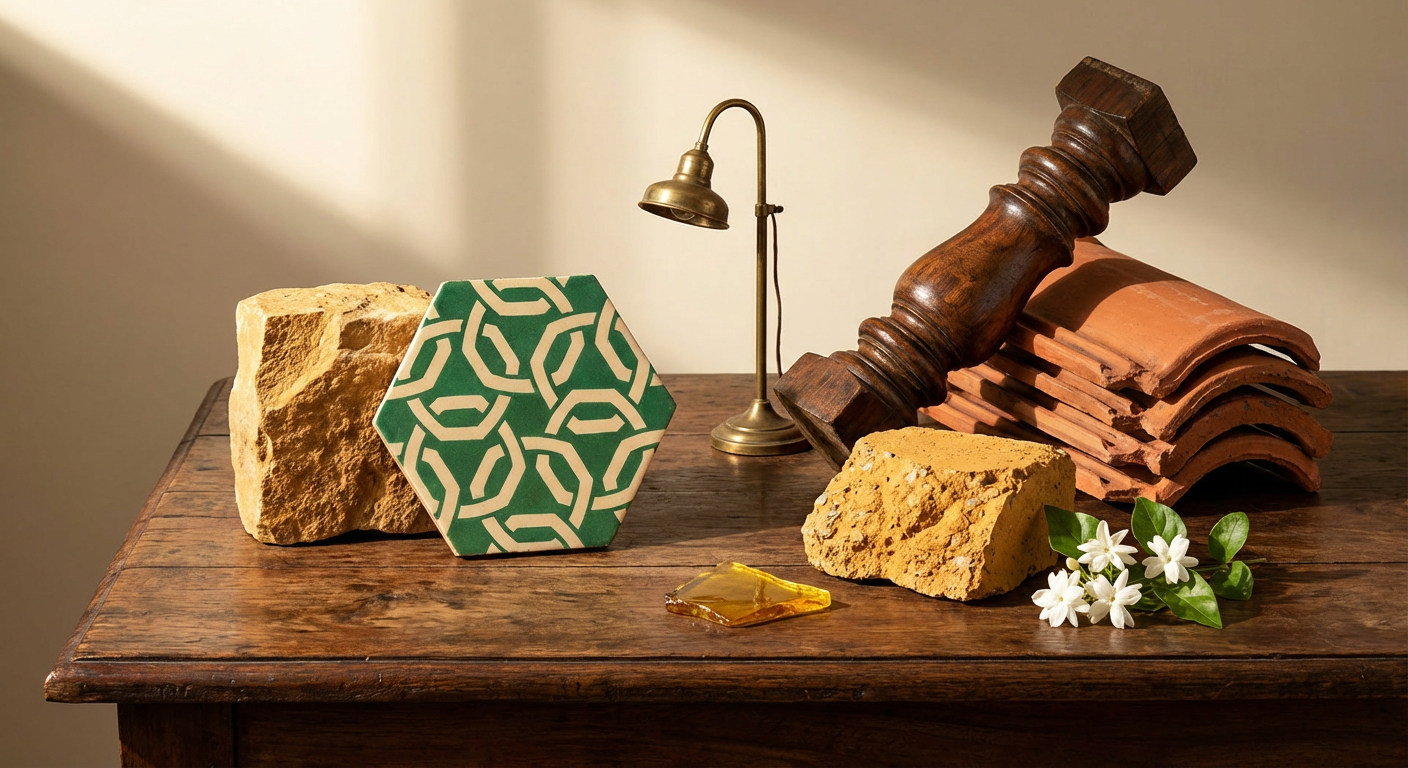
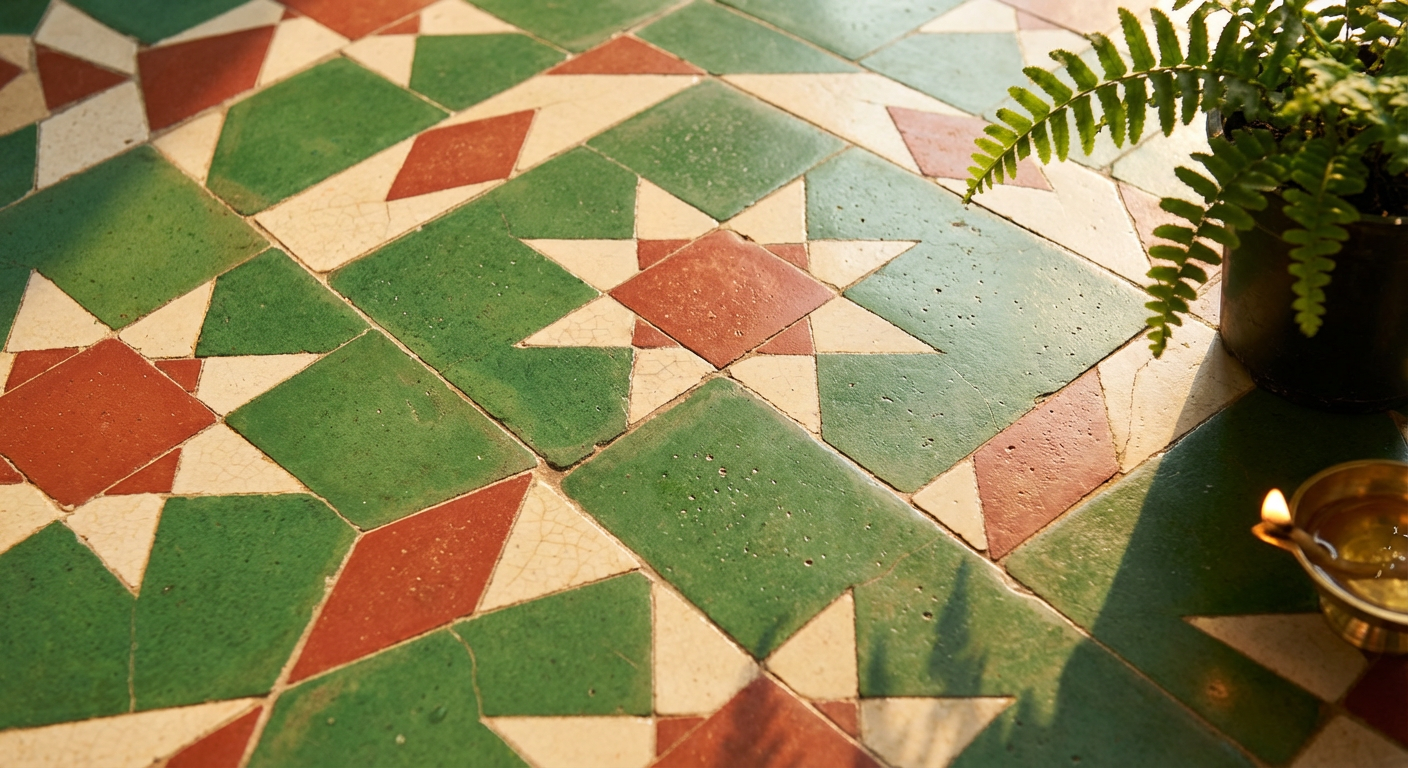
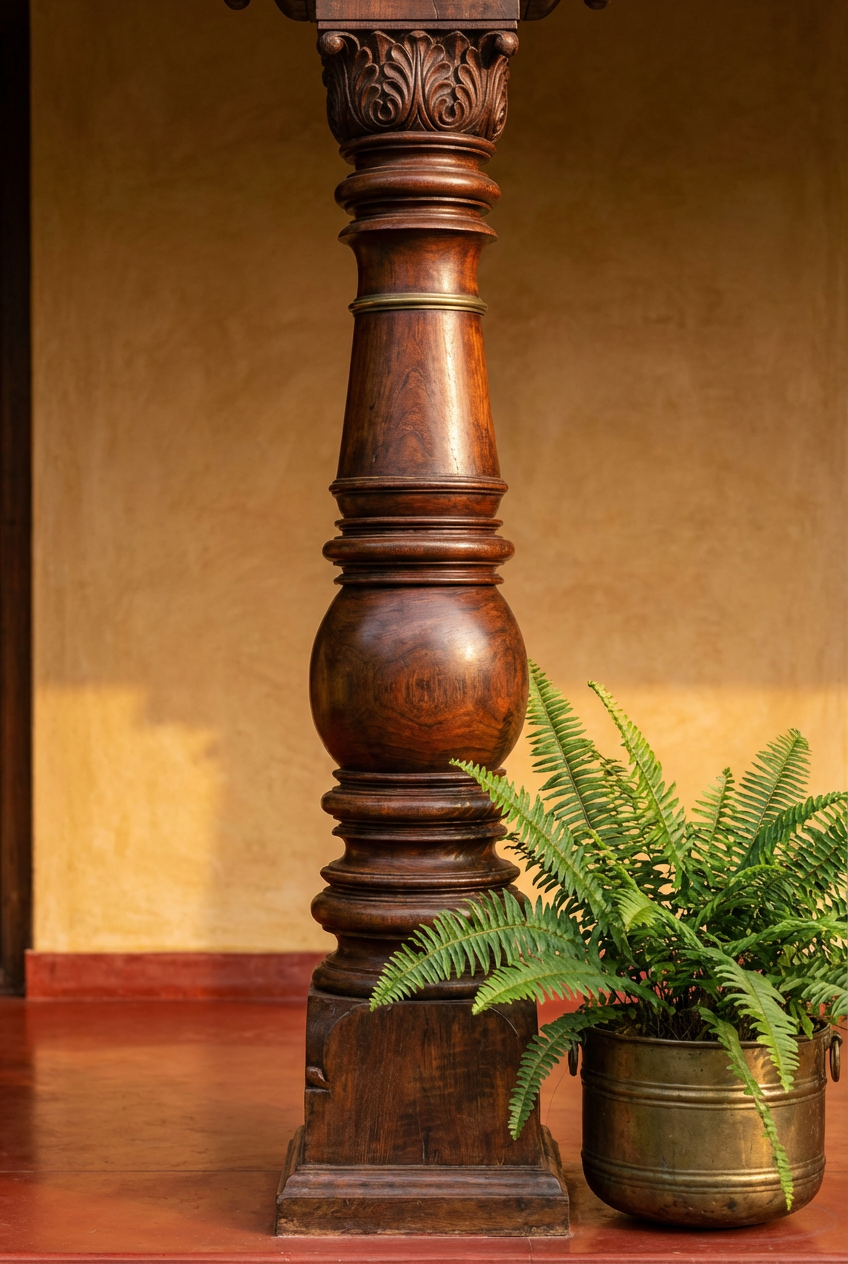
Every material has an origin. Every origin has a craftsman.
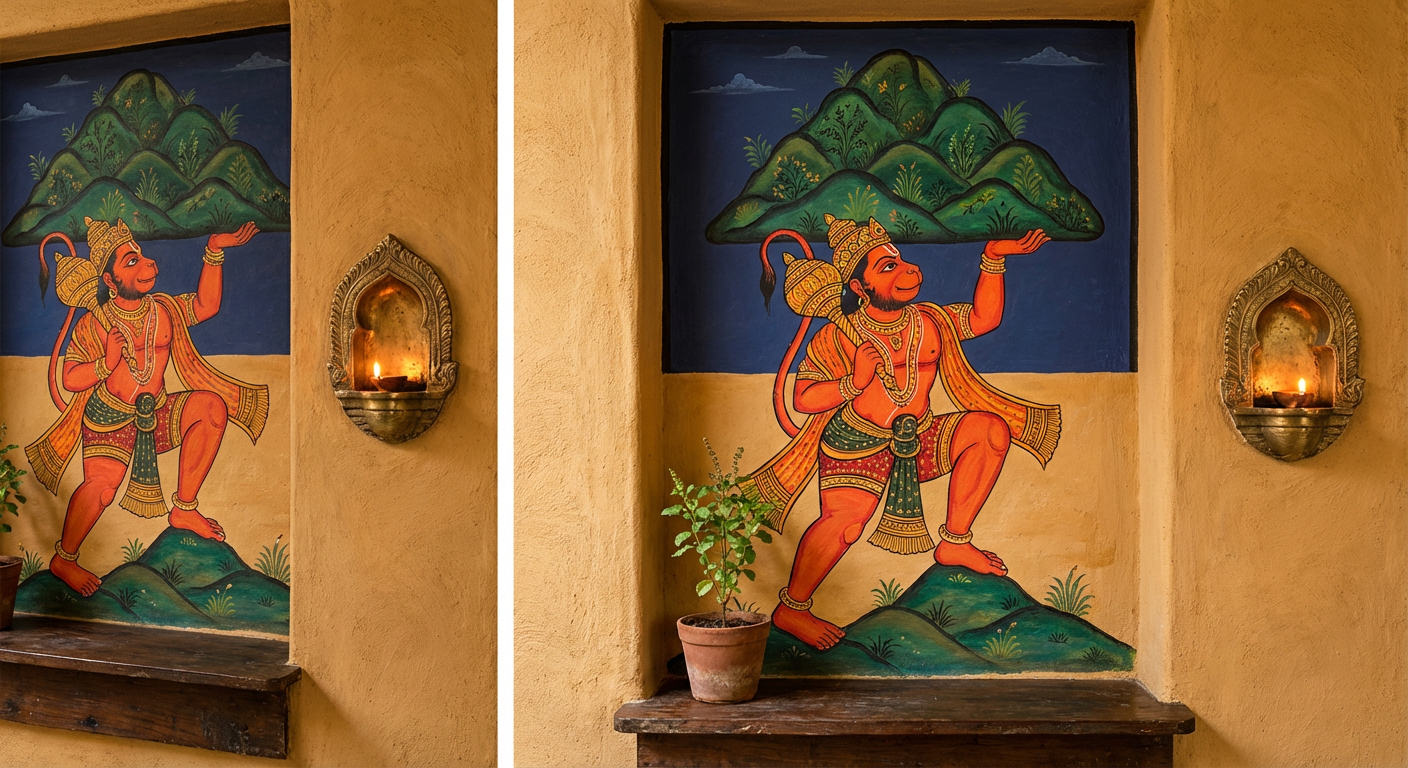
The pradakshina path wraps around the courtyard. On its walls, the Ramayana is painted. Not printed. Not pasted. Painted by hand, on wet lime plaster, in the tradition of temple murals.
You walk the path. The story unfolds. Janmotsav to Ram Bhakt. The same route Shri Ram walked. The same story the house tells in its room names.
Inspired by narrative architecture. The Envisage Ramayana House maps the epic to physical space. We do the same. The house is the book. The walls are the pages.
From nine regional traditions. Each artist paints what their tradition knows best. The result is not uniform. It is India, on the walls of one house.
Every joint visible. Every surface honest. Nothing hidden behind plywood and paint.
See the spaces