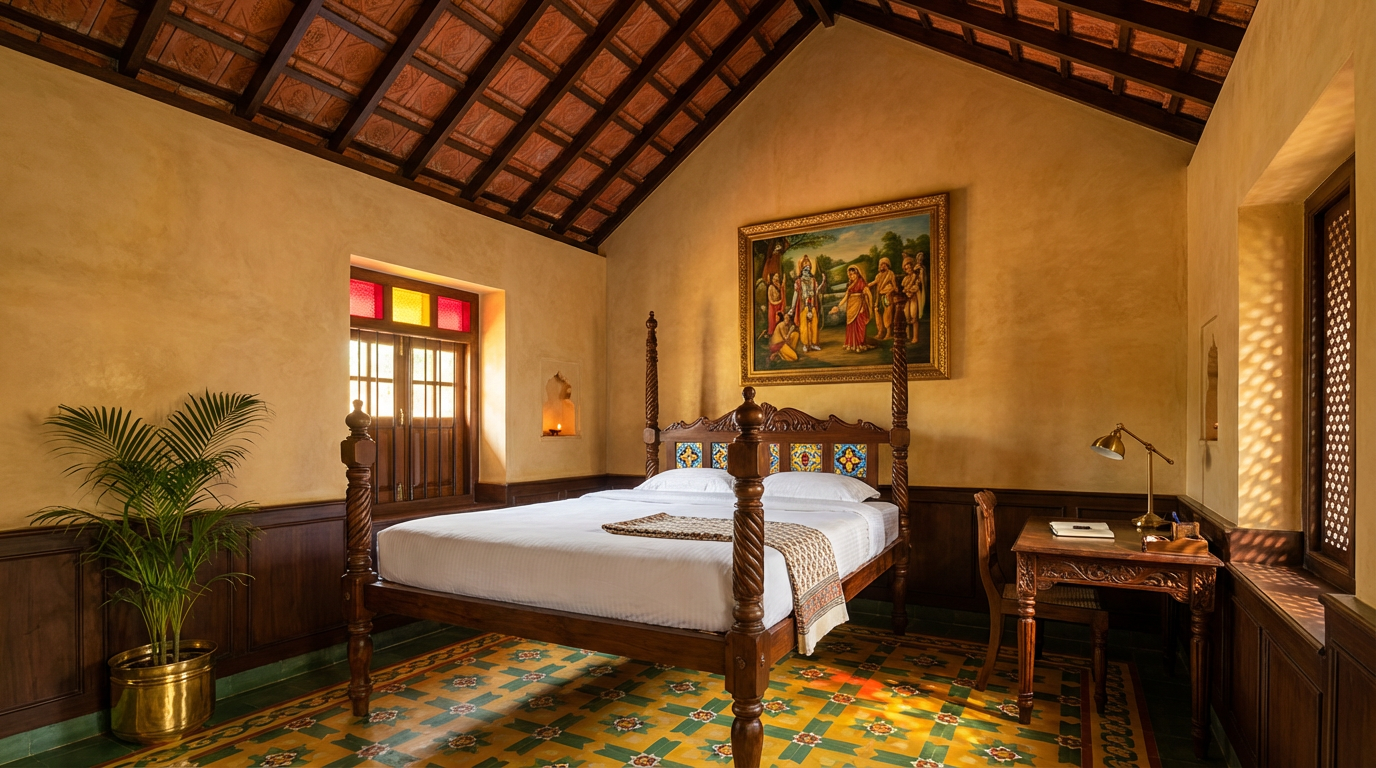
Twelve Rooms. Twelve Chapters.
Each studio is a chapter of the Ramayana. The painting on the wall tells the story. The room holds the feeling.
Each studio is a chapter of the Ramayana. The painting on the wall tells the story. The room holds the feeling.
A guest who stays long enough walks the entire epic. Room 1 is birth. Room 12 is eternal devotion. Each painting is commissioned from a different tradition of Indian classical art — Rajasthani miniature, Madhubani, Pahari, Kalamkari, Gond, Pichwai, Tanjore, Kangra, Warli, Bengal Pat, Raja Ravi Varma, and contemporary Indian. Every room name is auspicious. Every painting tells a sacred story.
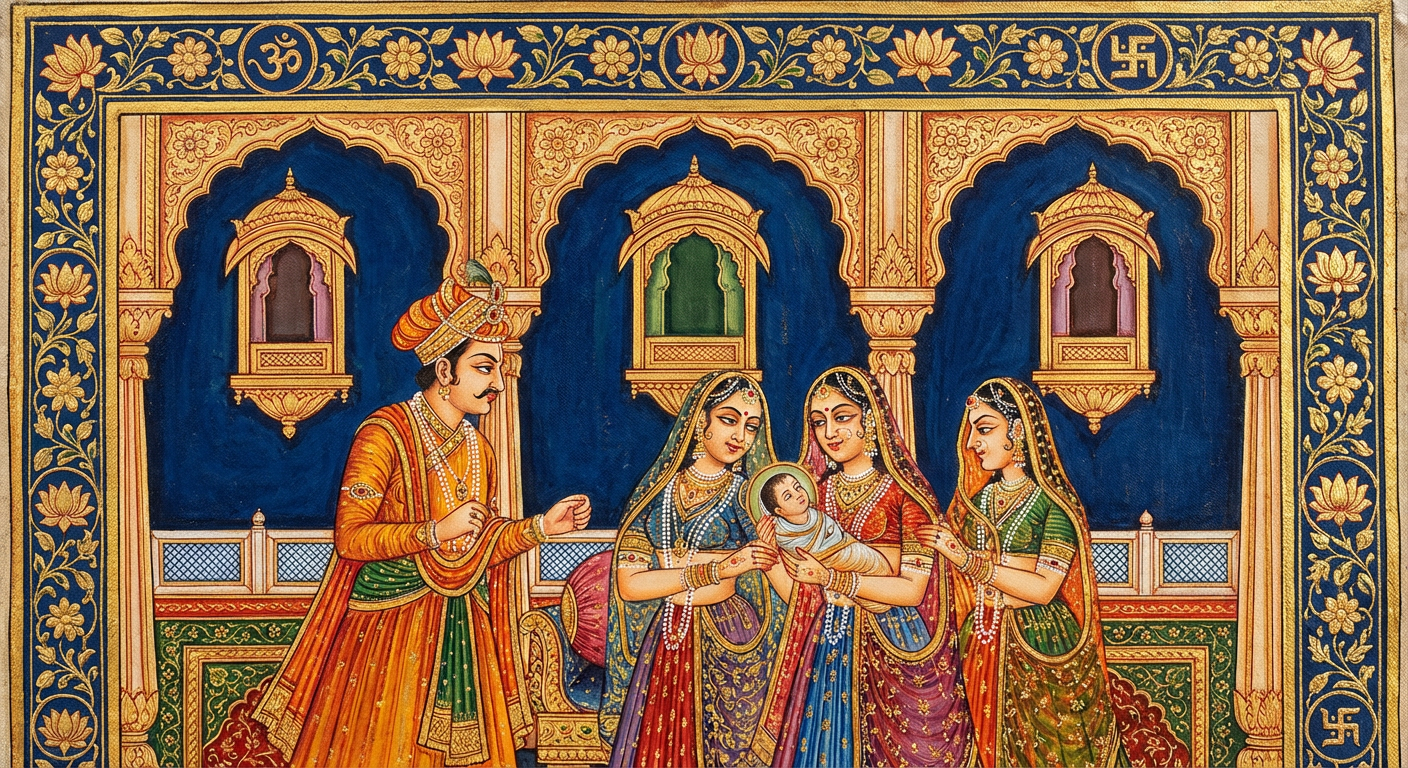
जन्मोत्सव
Rajasthani MiniatureThe celebration of birth. A palace lit with joy. Maharaj Dasharatha holds his son. The world changes.
Rajasthani miniature in jewel tones — deep blue arches, gold ornaments, saffron garments. The royal women present the infant Shri Ram in the palace of Ayodhya. Every detail hand-rendered: the brocade, the lamps, the expressions of reverence. Ground floor, closest to the courtyard. You wake to morning puja at the Tulsi Vrindavan.
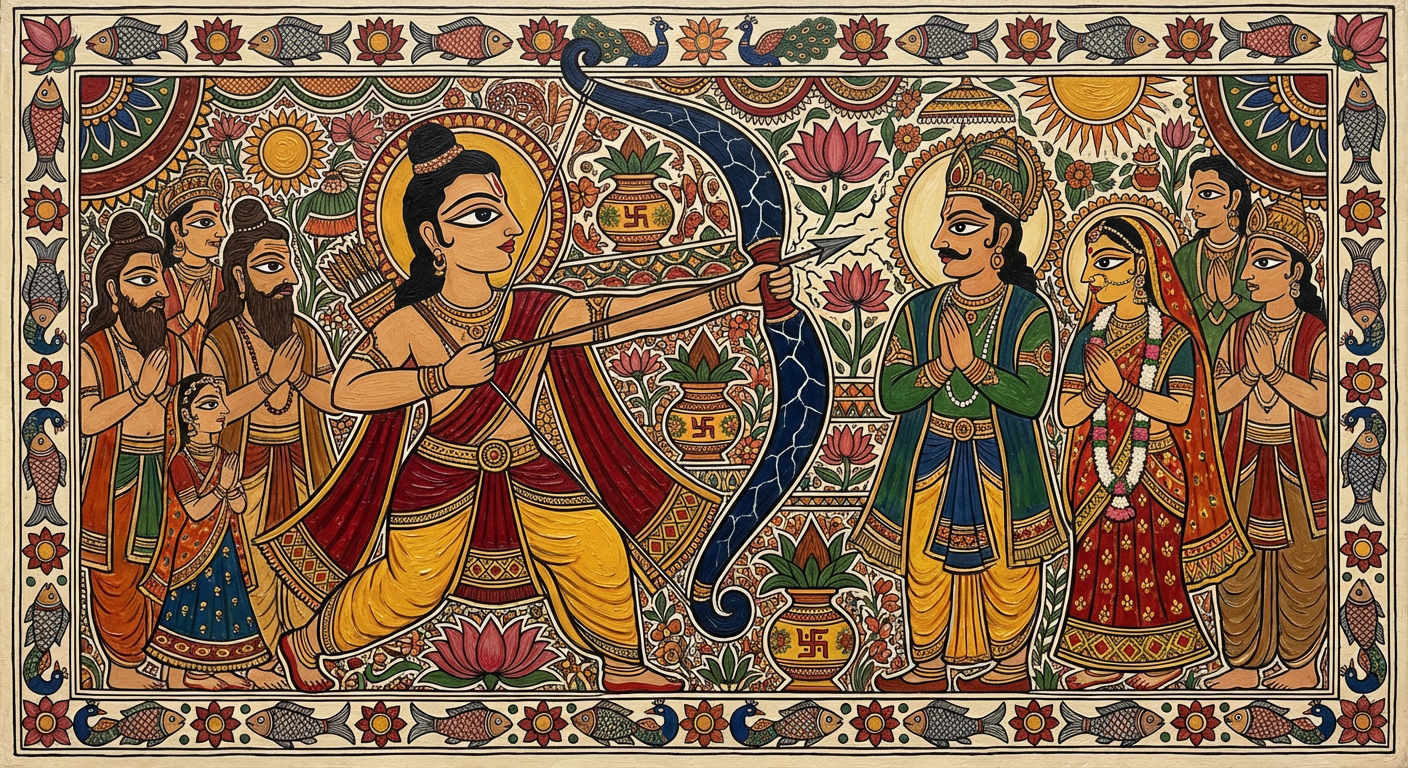
स्वयंवर
MadhubaniThe divine bow breaks. Mata Sita lifts the garland. A promise made in a single gesture.
Shri Ram draws the great bow Pinaka in King Janaka's court — rendered in bold Madhubani brushwork from the Mithila tradition, the very region where the Swayamvar took place. Black outlines filled with vermillion, turmeric, and indigo. Fish and peacock motifs frame the scene. This room faces the kitchen garden. Jasmine fragrance reaches you in the evening.
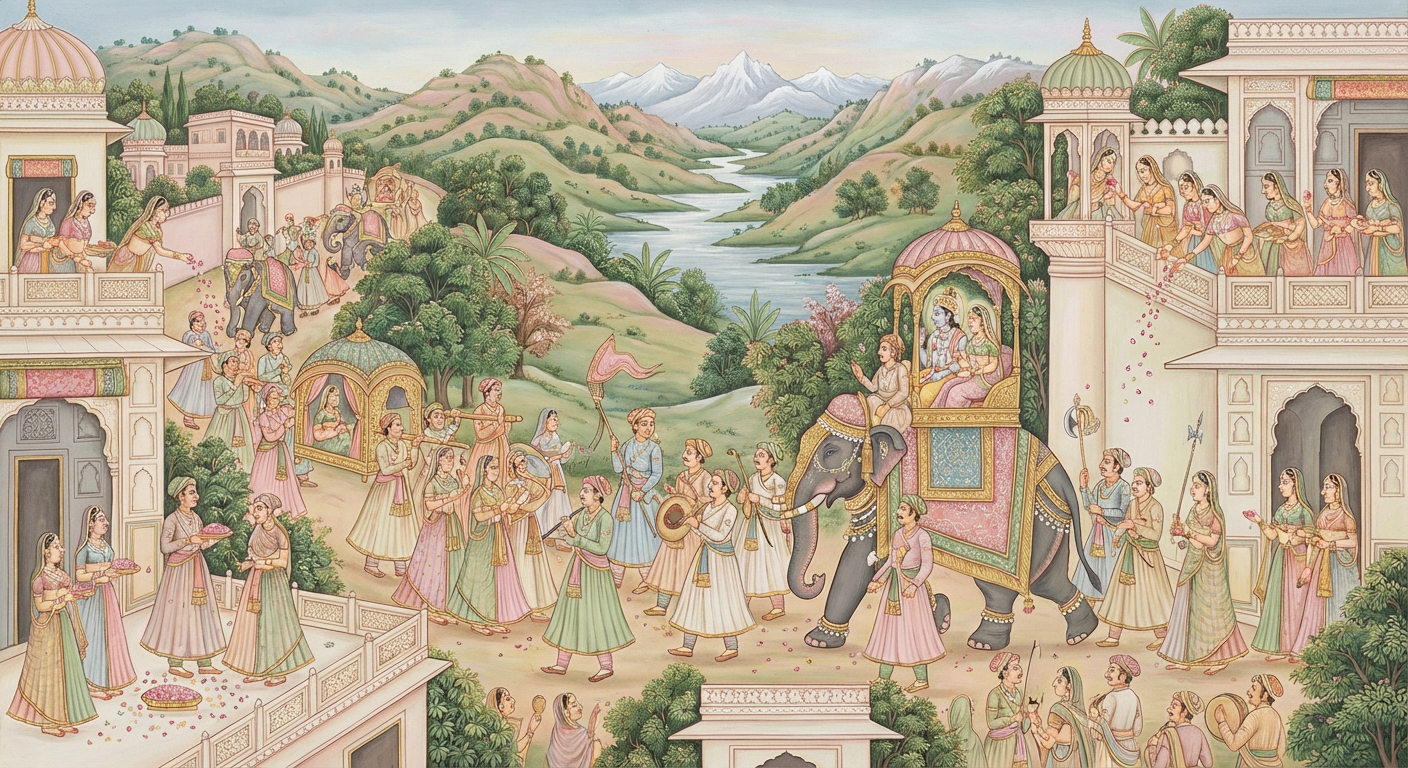
बारात
Pahari MiniatureThe wedding procession. Elephants, musicians, flowers. The city celebrates. Two families become one.
A grand Pahari panorama of the divine wedding procession — Shri Ram and Mata Sita on a decorated elephant, musicians and dancers, courtiers showering flowers from palace balconies. The layered Pahari mountains recede into a soft blue-green horizon. Joy in every brushstroke. This first-floor room fills with the feeling of celebration.
पंचवटी
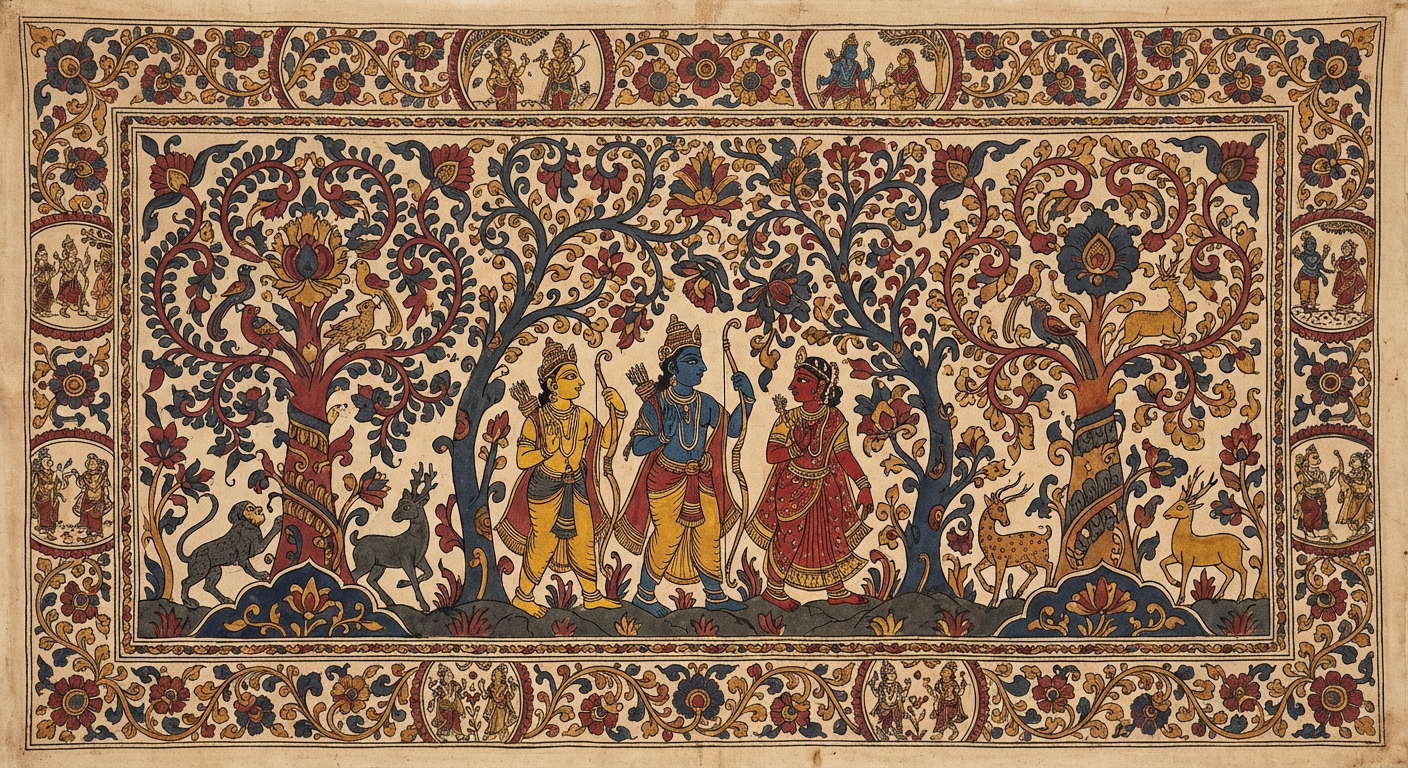
KalamkariThe hermitage in the deep forest. Mata Sita gathers flowers. Shri Ram watches the river.
Kalamkari — literally "pen work." Fine outlines drawn by hand, filled with natural vegetable dyes from Srikalahasti. Every leaf on every tree is individually rendered. This room overlooks the meditation garden. The Peepal tree outside your window echoes the forest in the painting.
सुन्दरकाण्ड
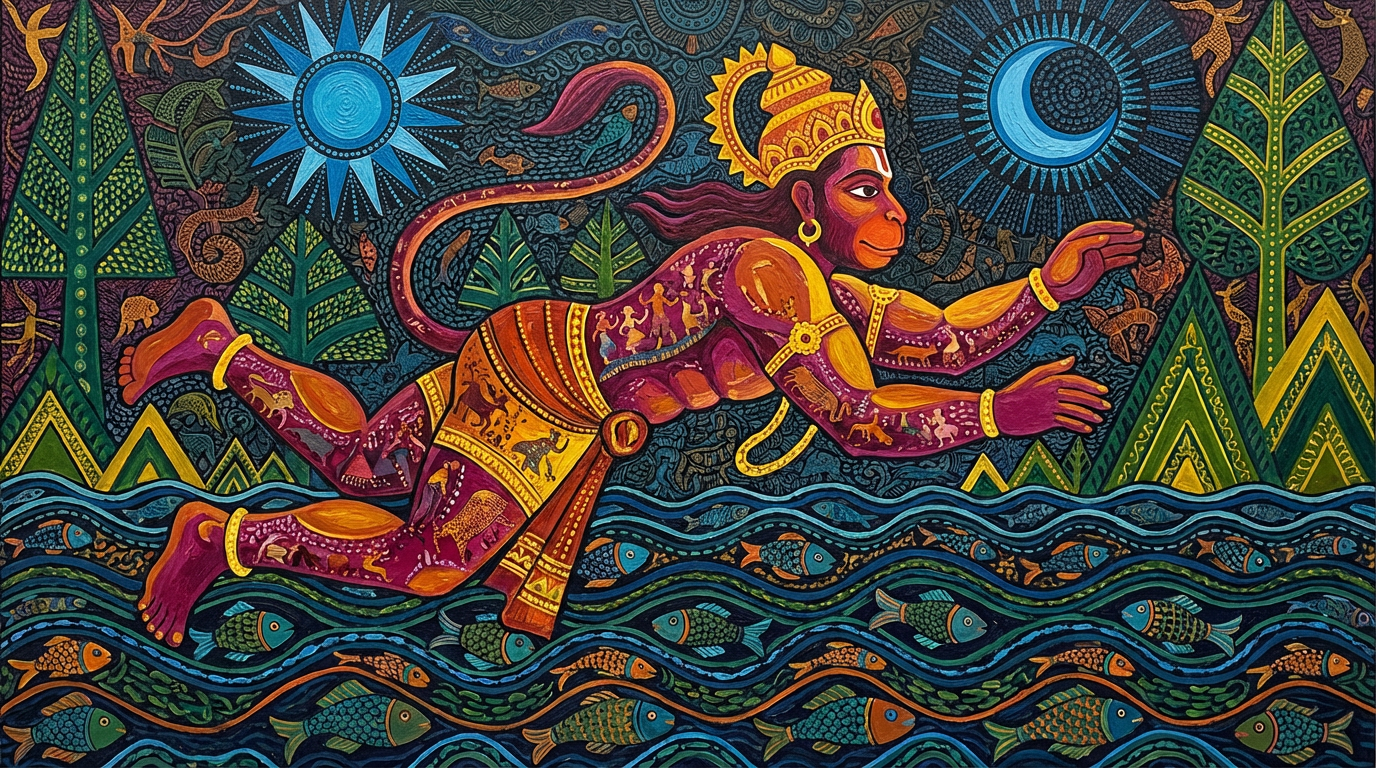
Gond Tribal ArtThe beautiful chapter. Shri Hanuman leaps across the ocean. Devotion conquers every distance.
Pardhan Gond artists transform Shri Hanuman's ocean leap into pure energy — dot-and-dash patterns filling his body with miniature narratives, the ocean rendered as undulating waves and fish below. Sun and moon in the sky. Cerulean, magenta, forest green, and burnt orange on a dark ground. The most dynamic painting in the collection. This room is nearest the common lounge.
भक्ति
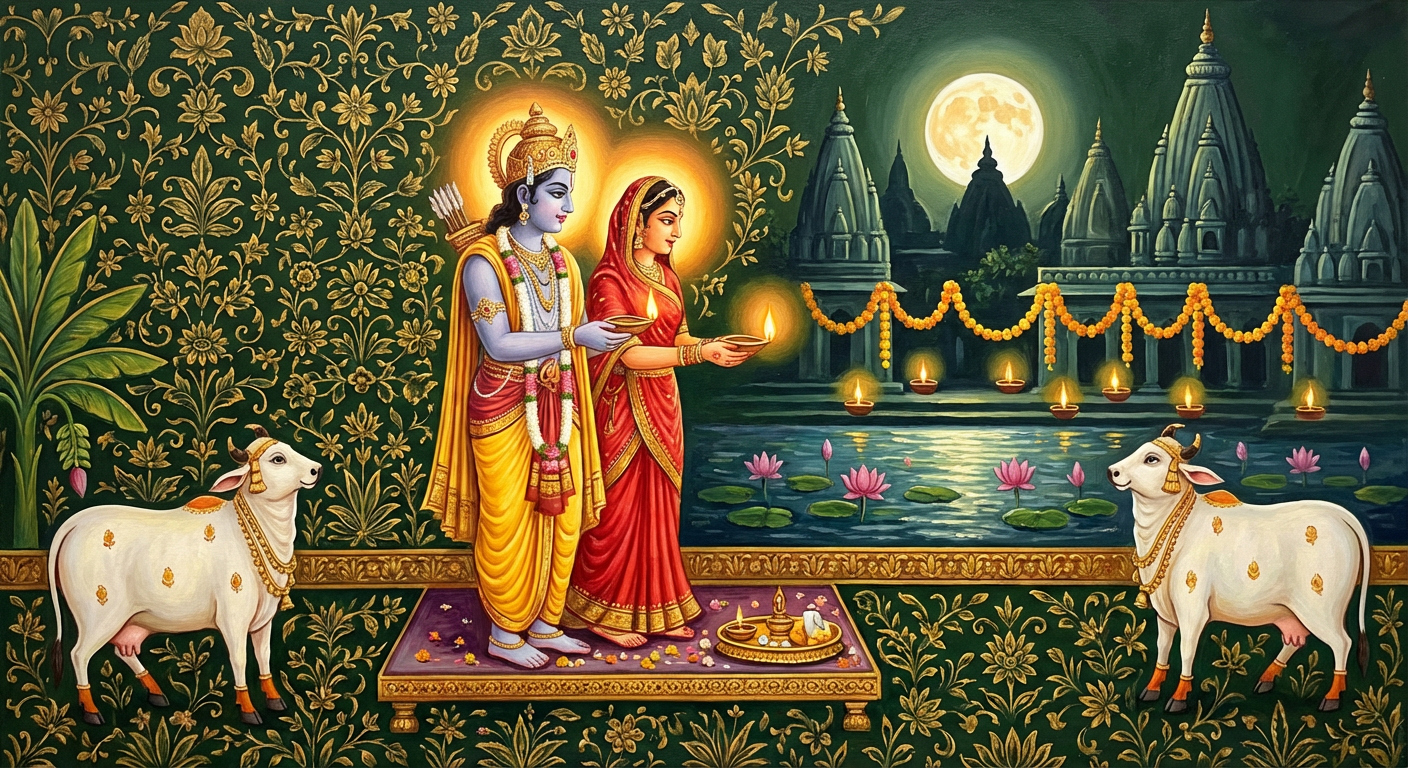
PichwaiDevotion without condition. Love without reason. The lamp that never goes out.
Pichwai paintings from Nathdwara are made for temples — rich, devotional, layered with lotus ponds, sacred cows, and gold on a deep green ground. A moonlit scene of divine offering by the riverside. This painting radiates the bhakti that is the spiritual heart of the Ramayana. First floor, facing the courtyard. The Kirtan Mandap is directly below. You hear the harmonium.
संजीवनी
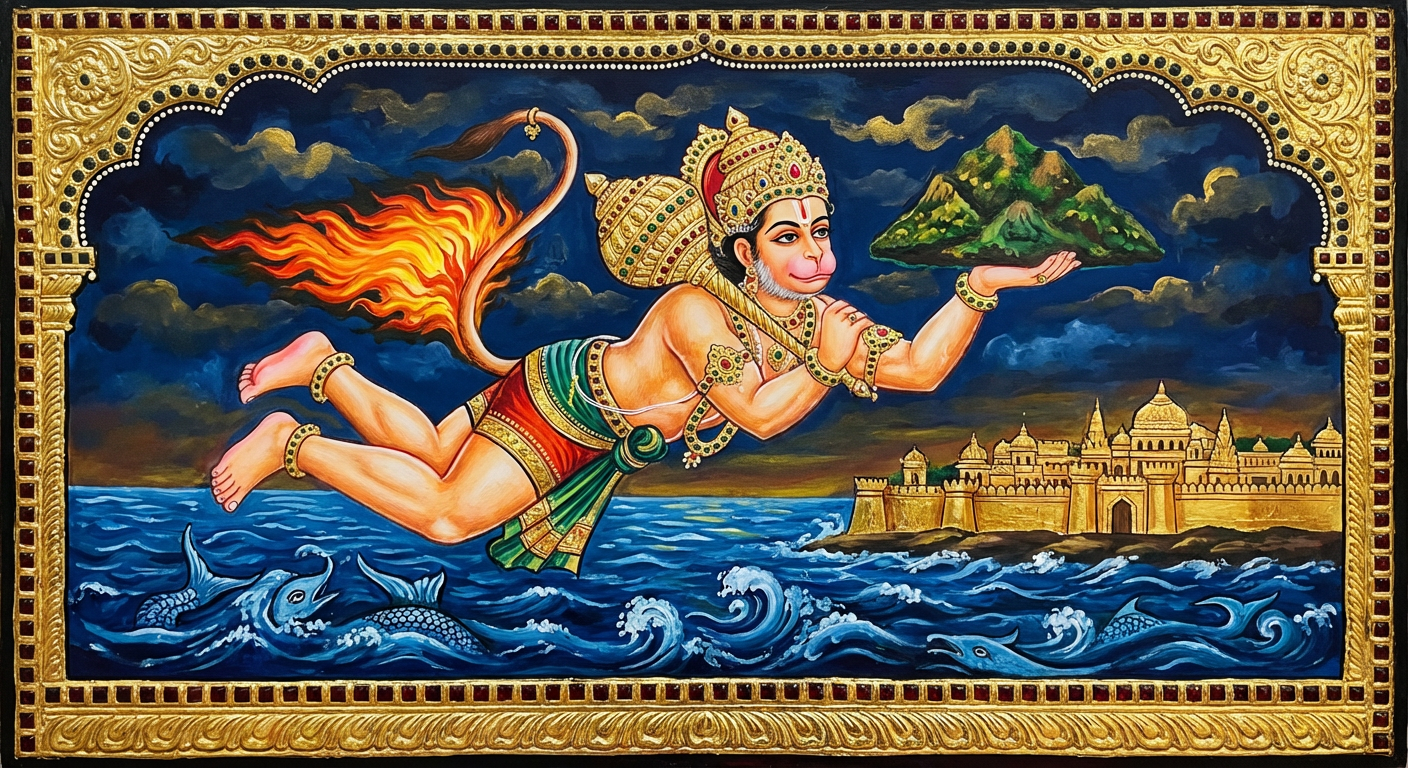
TanjoreShri Hanuman carries the mountain. Life returns. Love heals what war wounds.
Tanjore paintings use real gold leaf — beaten thin, pressed into the surface, catching every lamp's light. Shri Hanuman flies across the ocean carrying the Sanjeevani mountain, his tail ablaze, Lanka's golden city visible below. The semi-relief gold work on his ornaments glows at dusk when the diya is lit. This room faces east — you wake to the first light in the building.
वनवास
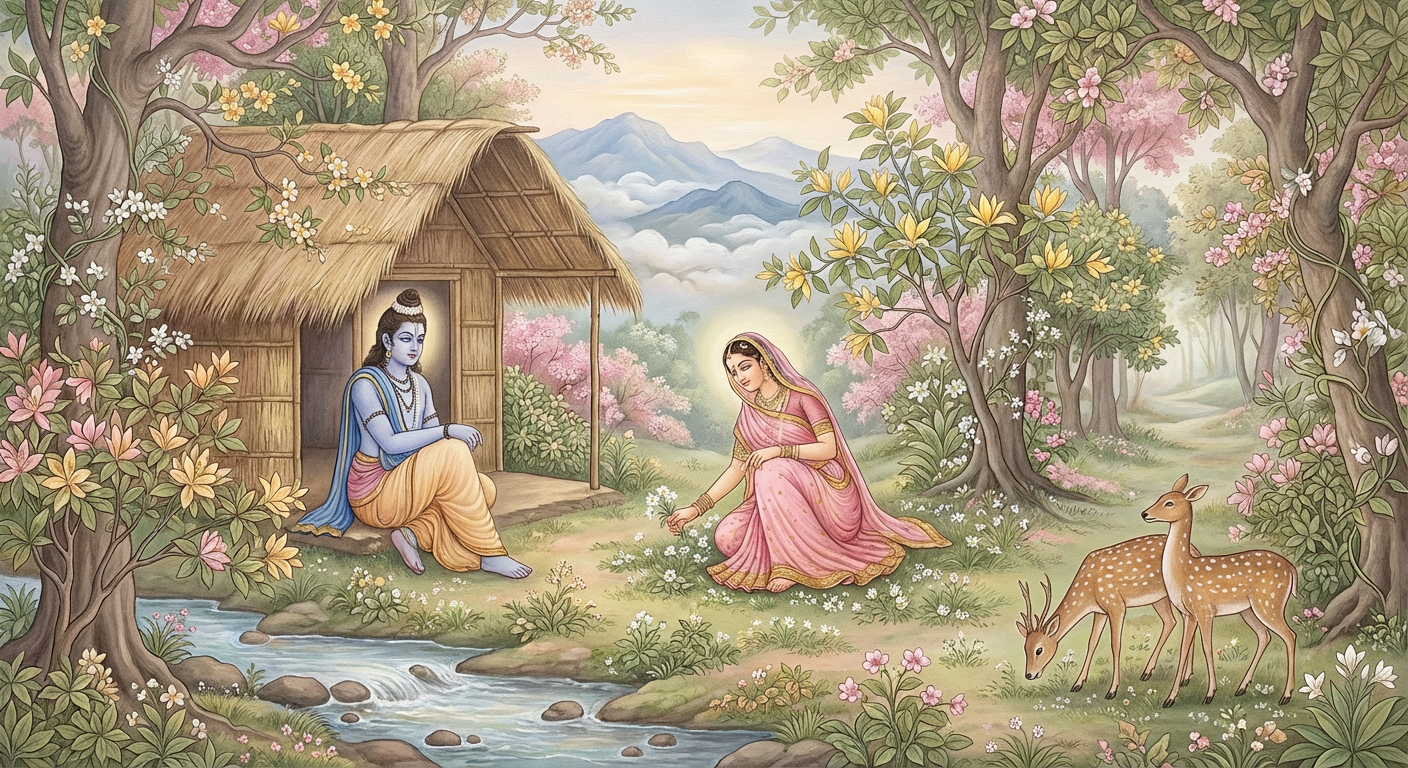
Kangra MiniatureThe sacred exile. The forest becomes home. Shri Ram and Mata Sita find peace among the trees.
Kangra miniatures are the gentlest paintings in India — soft colours, lyrical landscapes, naturalistic flowers drawn petal by petal. Shri Ram sits at the hermitage door while Mata Sita gathers flowers among deer and birdsong. A stream, a thatched hut, mountains in the distance. This room overlooks the garden. The peace in the painting lives outside your window.
सेतुबन्ध
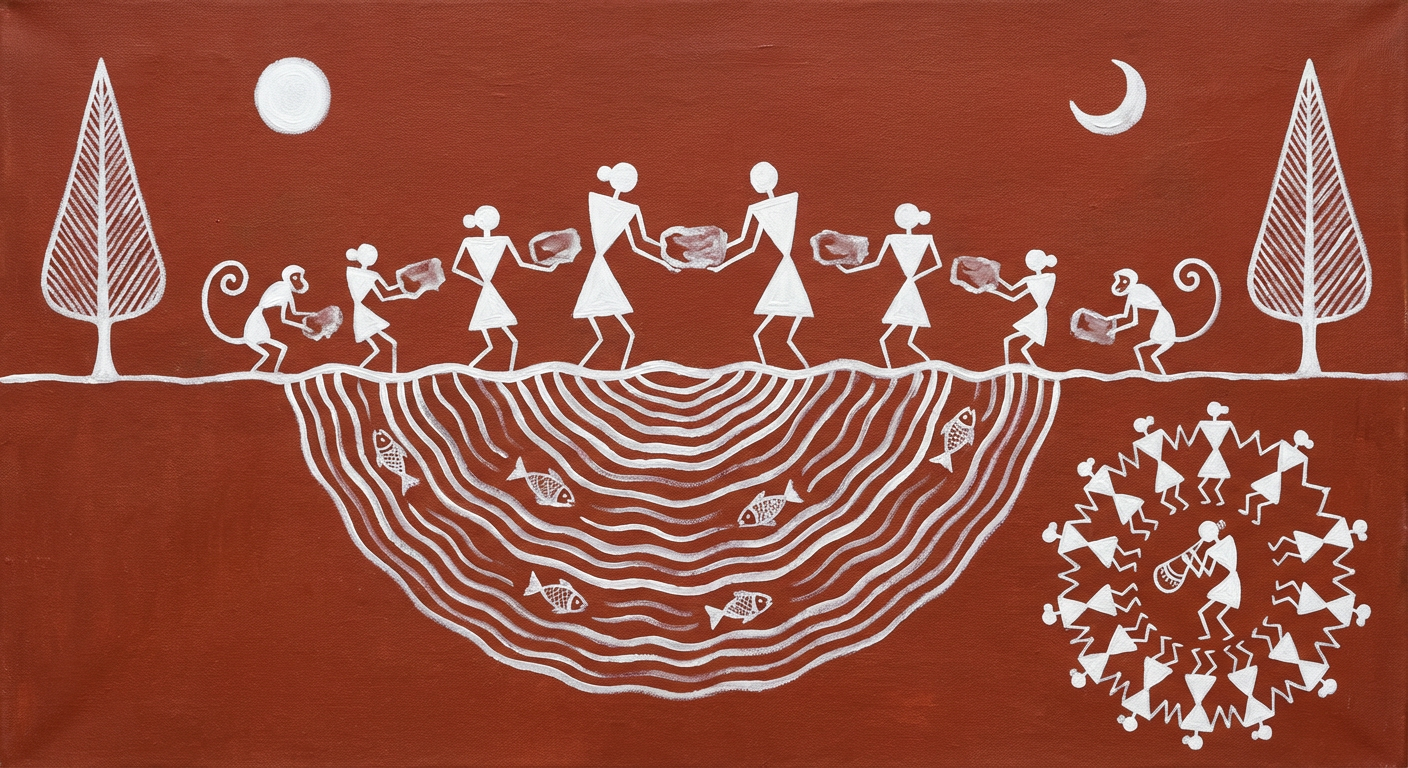
Warli Tribal ArtA bridge built by an army of devotion. Stone by stone across the sea.
Warli art strips the world to its essence — white stick figures on terracotta ground, working in rhythm, carrying stones. Hundreds of Vanaras building the bridge. The painting is about collective effort, not individual heroism. The simplest painting in the collection, and one of the most powerful. A second-floor room. The terrace is steps away.
विजय
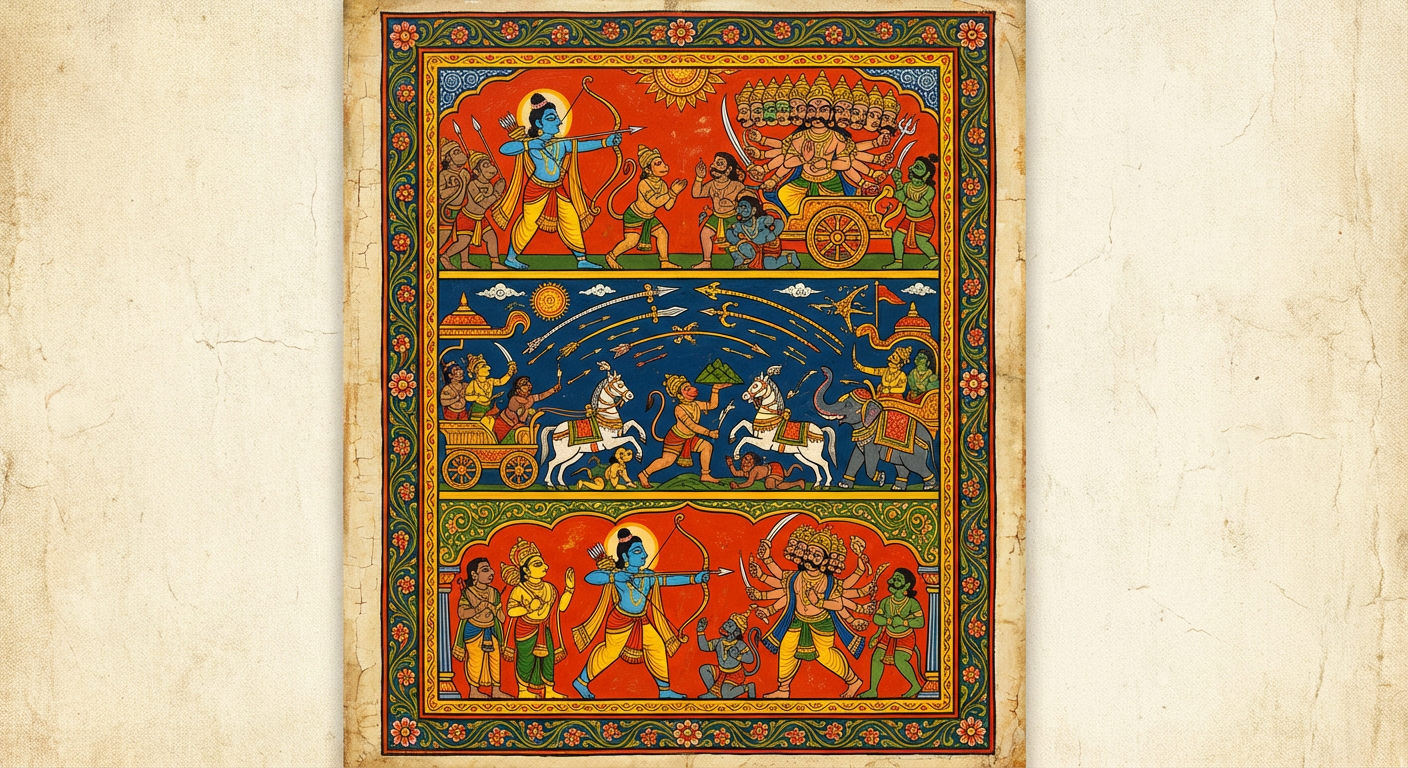
Bengal Pat (Scroll Art)The victory of dharma. The bow drawn for the final time. Good prevails.
Bengal Pat artists are storytellers — they unroll a painted scroll and sing the story as it unfolds. Bold outlines, flat bright colours, three panels narrating the great war: Shri Ram with bow drawn, the armies clashing, dharma triumphant. The most narrative painting in the collection — a story within a story. Second floor room with temple spire views from the window.
पुष्पक
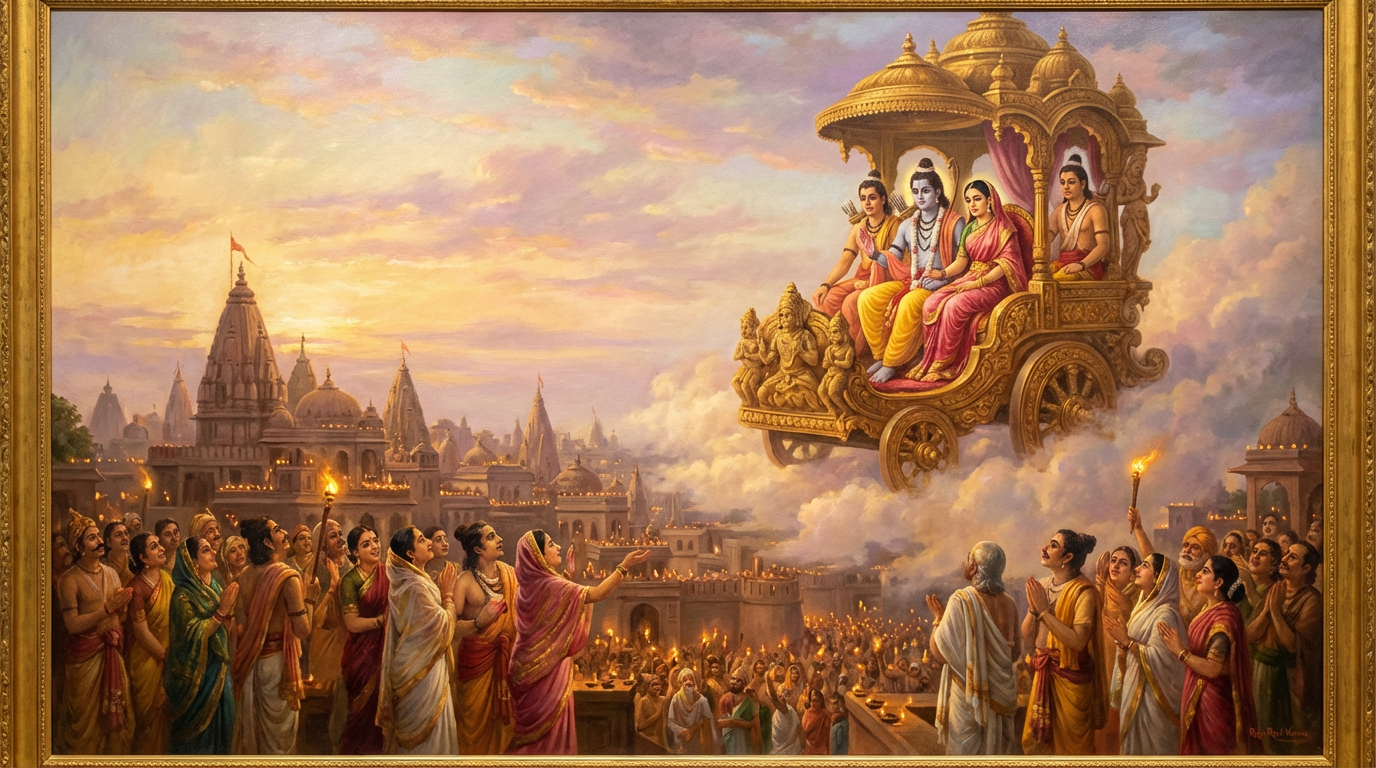
Raja Ravi VarmaThe return home. The golden Pushpak Viman above the clouds. Ayodhya waiting below with lit lamps.
Raja Ravi Varma brought European oil technique to Indian devotion — realistic anatomy, dramatic lighting, the weight of silk and gold. Shri Ram, Mata Sita, and Shri Lakshmana on the celestial Pushpak Viman, descending through clouds toward Ayodhya. Citizens below hold lamps and torches, looking up in joy. The most luminous painting in the collection. This is the premium courtyard-facing room.
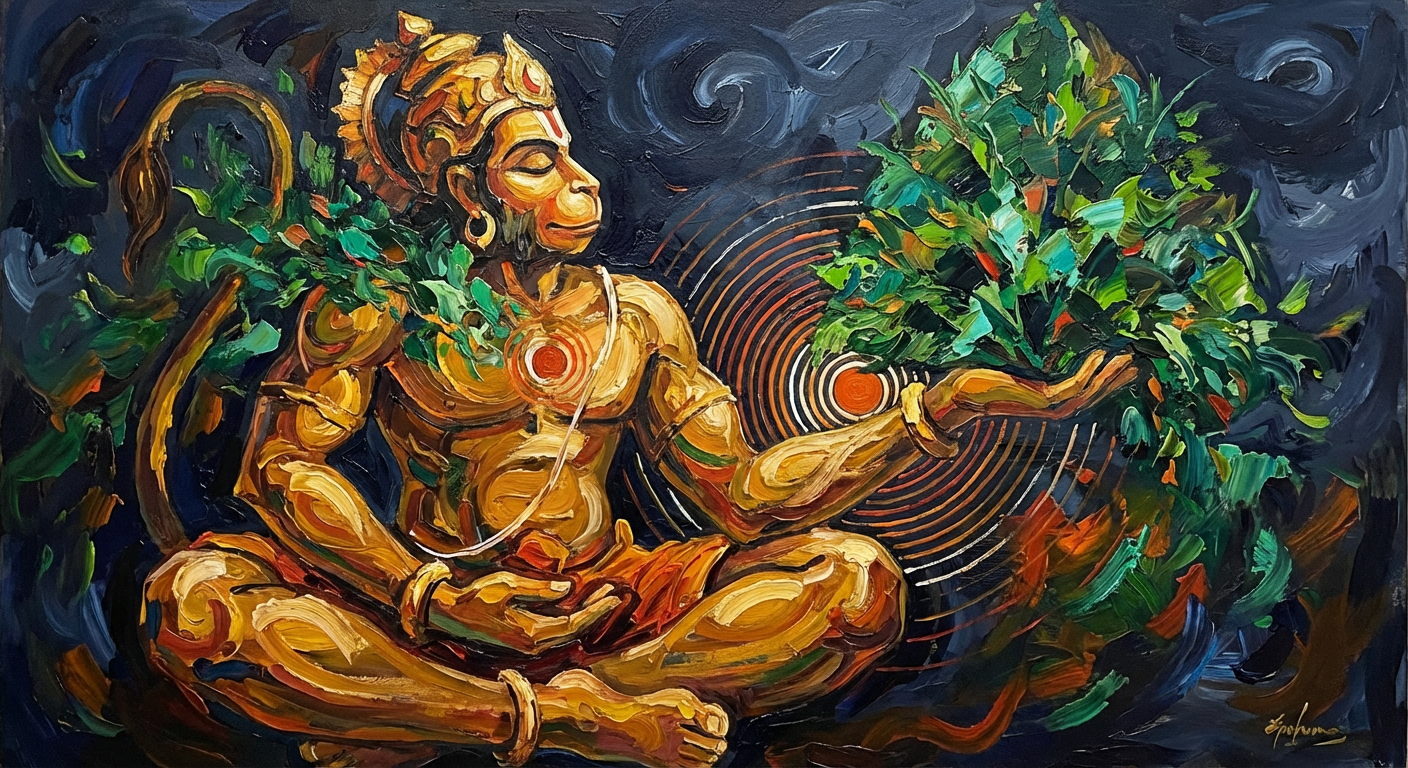
राम भक्त
Contemporary IndianThe eternal devotee. Shri Hanuman in meditation. The story never ends — it lives in those who carry it.
The final room. A contemporary Indian painting — bold, textured, alive — shows Shri Hanuman in deep meditation, the Sanjeevani mountain's greenery surrounding him like a halo, divine energy radiating outward. This is the most modern painting in the collection, but its subject is the most ancient truth: devotion is eternal. The last room on the second floor, closest to the terrace. Step outside and see Ayodhya under the stars.
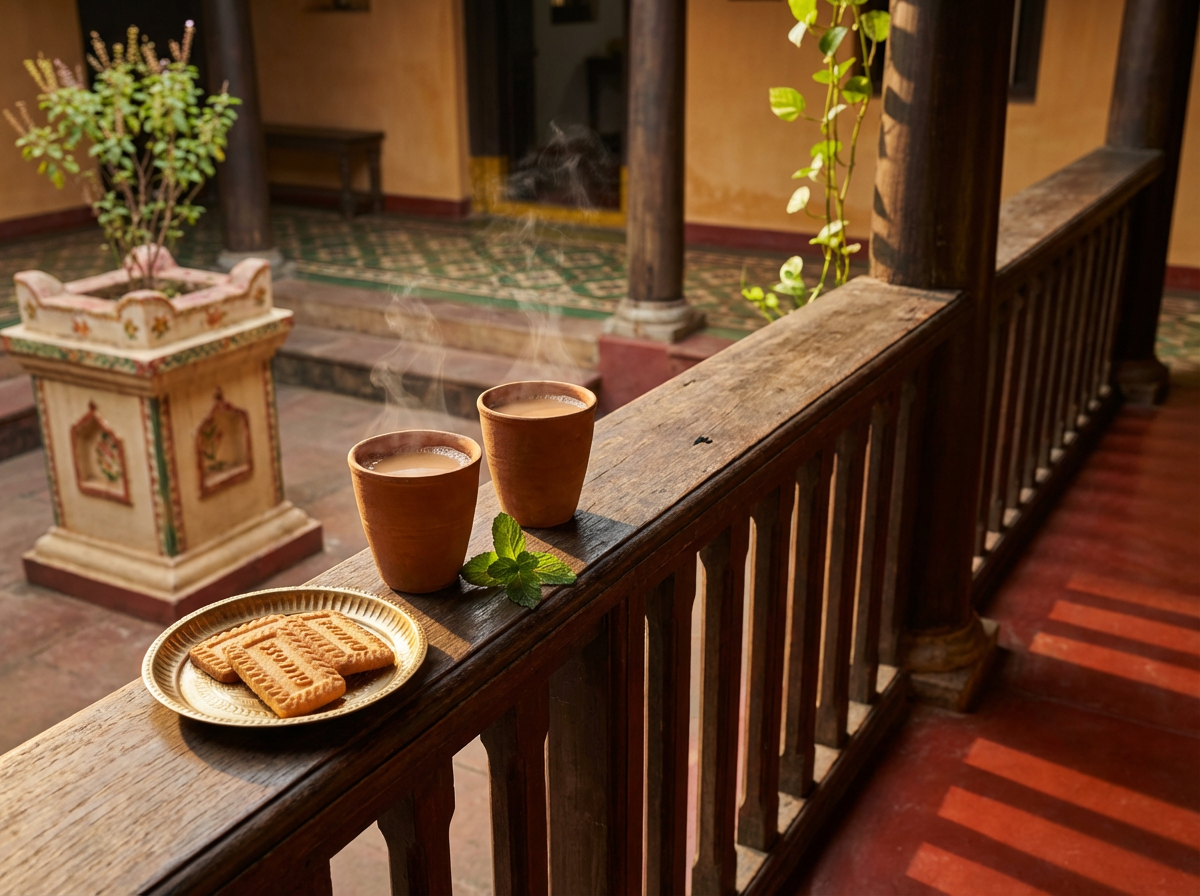
Carved teak bed with tile inlays. Mangalore tile ceiling with exposed wooden rafters. Athangudi geometric tiles on the floor — each room a different pattern. Coloured glass transom windows casting warm light.
A kitchenette with stone counter, brass sink, and induction cooktop. A reclaimed wood writing desk by the window. A brass diya in the wall niche with a matchbox beside it.
The Ramayana painting above the bed is your room's chapter. You sleep inside the story.
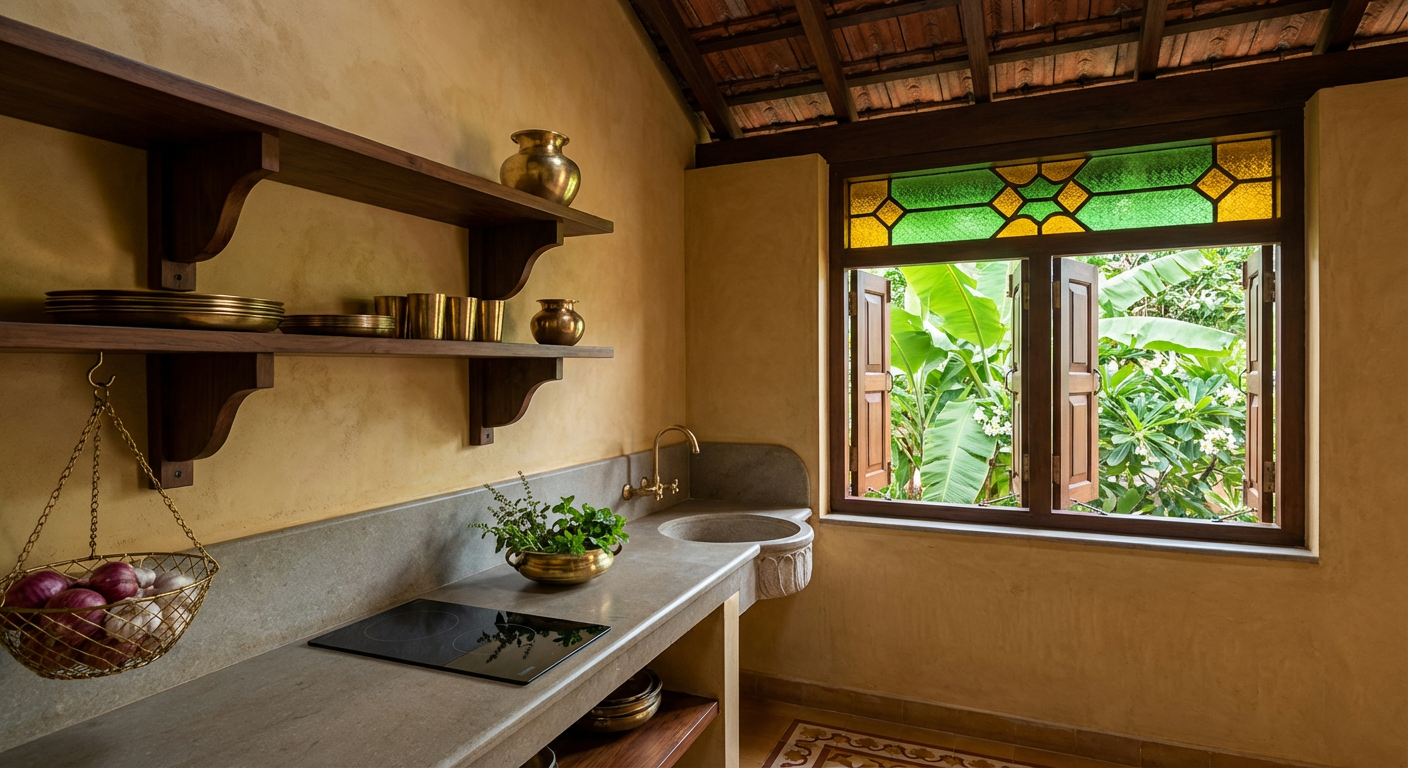
Every room has a kitchenette. Two-burner induction. Brass plates and glasses. A copper water filter. Fresh curry leaves in a brass vessel.
A full wardrobe. A writing desk large enough for books and notebooks. Cotton mattress that breathes. A window that opens to the breeze.
These rooms are designed for weeks and months. Not for a night.
Each studio: 225 sq ft. Kitchenette. Writing desk. Reclaimed wood door with brass handle. Brass diya in the wall niche. One Ramayana painting in a different Indian classical tradition.
Standard rooms (8) face the garden or corridor. Premium rooms (4) face the courtyard with larger windows and verandah access.
Standard from ₹2,000/night · ₹35,000/month | Premium from ₹3,500/night · ₹55,000/month
See pricing